Come and travel Oklahoma with me.

Posts tagged ‘Oklahoma history’

Geary, Home of the Gillespie Building and a Water Trough
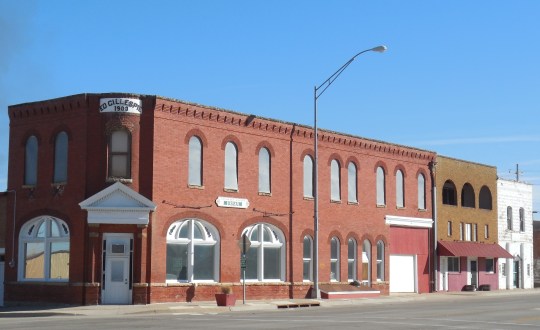
Gillespie Building

1903 Gillespie Building in Geary, OK, placed on NRHP in 1989.  2016

Since the month of February was abnormally warm, we picked a nice Saturday afternoon and just went out for a drive.  We ended up in the town of Geary, a small town of about 1,200 people forty miles west of Oklahoma City.  Not really much there and nothing really to do, but they did have a really nice old downtown with some interesting buildings.
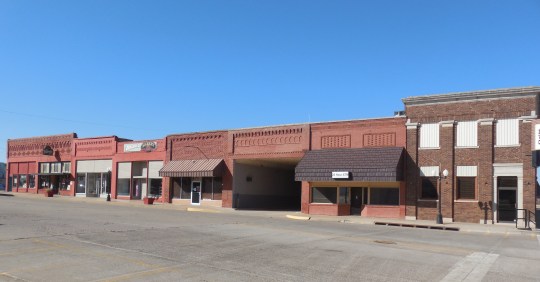
Downtown Geary

Downtown Geary, OK. 2016

So lets start with a brief history of Geary first- founded in April of 1892 when the first non-Indian settlers were allowed in during the Cheyenne-Arapaho Opening, the town was actually over a mile north of its present location.  It was moved south shortly after to meet the Choctaw, Oklahoma, and Gulf railroad being built from El Reno.  The post office was officially established on October 12, 1892 with the town being named after Edward Guerrier, a U.S. Army scout and interpreter who settled north of the town site.   The town grew rapidly with the population getting all the way up to around 2,500.  A big boost for the small town came in 1912 when the Postal Highway came through, this later became the original path for Route 66.  Unfortunately, Geary’s portion of Route 66 was bypassed in 1934.

Now the town is quiet, not much to do.  So why was I there, I wanted to see two places that are on the National Register of Historic Places.  The first was hard to miss- The Gillespie Building.  Siting on the southeast corner of Main and Highway 281, can’t miss the big red brick building.  It was built in 1903 by Ed Gillespie.  Originally a bank, it served many other businesses until it became a museum.  Unfortunately it looks as though the museum has been closed for a while.

Just a block east on Main Street is the second NRHP location and has to be the most unique, the Public Water Trough.  I know it sounds weird right, but this was really a big deal to farmers who came to town.  The trough was placed near the railroad depot and grain elevators in 1901.  This was at a time when the farmers would bring their product into town by horse-drawn wagons and it was helpful to have somewhere for those horses to get a drink.  You really have to think of it as an early gas station.  The original trough was wooden with the water pumped from a well close by, but sometime in the 1920’s it was redone with concrete and connected to city water.  It was used frequently up until the 1940’s.  The city of Geary had four of these troughs around the city and for some reason this was the only one to survive.
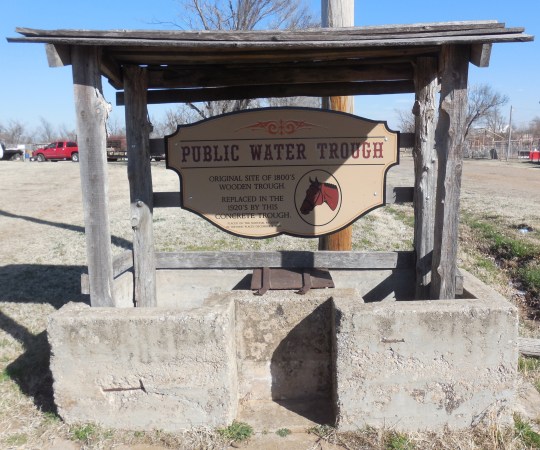
Public Horse Trough

Public Water Trough, Geary, OK, placed on NHRP in 1989. 2016

So that was my exciting visit to Geary, I did walk around the small downtown but there were no restaurants and all the businesses were closed.  If you ever find yourself in that direction, just take a few minutes to walk around and enjoy the history.

1910 building in Geary

1910 Brake Building in downtown Geary, OK. 2016
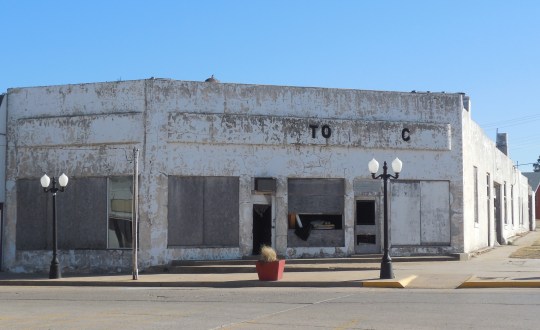
old service station in Geary

Another old building in downtown Geary, OK.  Possibly had been a service station or automotive dealership.  2016
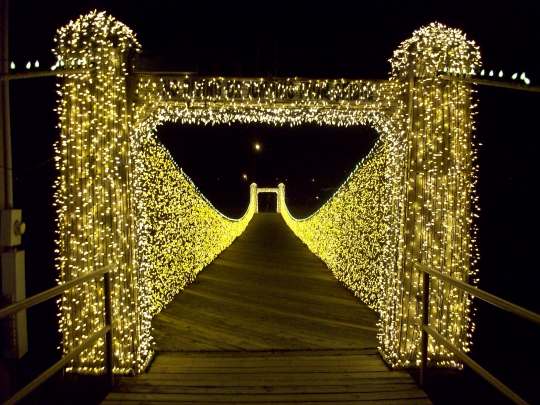
 

Kingfisher in Lights- Back Again

Kingfisher christmas lights 6

UPDATE-  Great news for those of us who loved the lights in Kingfisher, they are back on!  A group of Kingfisher residents have gotten together to restore this tradition, now under the name Kingfisher Winter Nights.  I haven’t been yet to see how many of the old displays are still there but hope to make it soon.  Hopefully they have enough visitors to keep the lights on for years to come.

From the time I was a little girl, one of our family Christmas traditions was driving around neighborhoods looking at the Christmas decorations people had put on display.  We did this every year, I remember going around Brookhaven in Norman, when almost every house was lit up.  We were some of the first to drive around Ski Island, before the crowds got too big that the residents shut it down.  Now that I’m older I love the light parks that different cities in the metro have for everyone to drive through.  I’ve been going to Midwest City since the first year the lights were turned on, we’ve gone to Yukon so many times they should at least name a light bulb after me, Chickasha is a long drive but a special treat but one that I really liked the best was the one that was the least popular, Kingfisher in Lights.

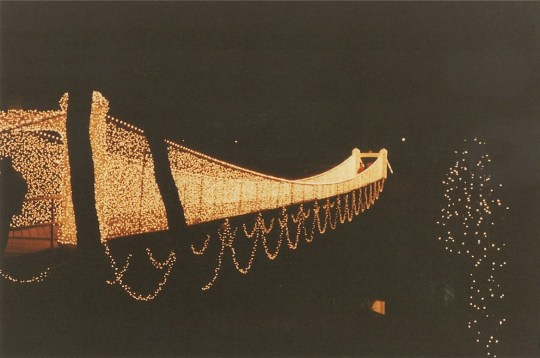
Not many knew about the Christmas display that the city put on every year in the park since 1996.  Everything was east of downtown right off of Highway 33 at the Kingfisher Park.  You could park your car, walk to the train station and for a dollar get a ticket to ride the small train through the displays.  It was almost always too cold and the lines really long but it was worth the 20 minute ride.  Most of the time you would get a seat in the enclosed cars but once we got to sit in the coal tender.  Yeah, it was cold but fun.  After the train ride, we would then get in the car and idle through the display, seeing everything from a different angle.  From the car you could talk to the fire-breathing dragon or watch the angels climb into the air.  You could get a better view of the baseball game being played in lights or just count the candy canes along the trails.  There was a cute display of a frog eating a fly and another with firemen putting out a fire.  Sometimes Santa would be out there, handing out candy to all the kids.  After you drove through you could then go back on another road to the the west side of the park and walk across the one hundred year old suspension foot bridge.  The bridge was lit with over 1000 white Christmas lights and you could see the creek very clearly from the deck.  One year while walking across, I saw something swimming in the water twenty feet below, it was a very large beaver that was making his home in the branches piled up along the small concrete dam.  I had seen lots of beavers dead along the side of the road but never out in the water, doing beaver stuff.

Kingfisher christmas lights 2

The fire-breathing dragon, 2010.  (Sorry, didn’t have a good camera at the time.)

Sadly this has all come to an end- in 2014 the lights were canceled because of road construction on Highway 33.  You just couldn’t get to the park.  I could understand that, I was disappointed but was hoping it would be up again this year.  Unfortunately, the display now been closed down for good.  Many of the residents of Kingfisher just didn’t have the time to volunteer and put the lights up.  So now it’s just a memory just as the one year Guthrie had a display (east of Cottonwood Creek, best I can remember is late 1990’s or very early 2000’s) and Duncan’s display (also in the late 1990’s or early 2000’s).  Maybe someday the town will realize they miss it and bring it back.

Christmas lights on bridge in Kingfisher 2001

Uncle John’s Creek bridge in lights, 2001.

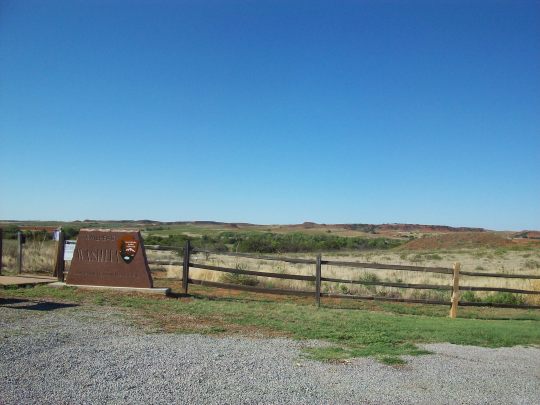
Washita Battlefield National Historic Site

Washita Battlefield 20

Many don’t realize that we have three National Parks in the state of Oklahoma.  All three are beautiful places to visit and each unique.  Unfortunately two are places where great tragedy and loss have occurred.  The Washita Battlefield National Historic Site in one of the oldest and most tragic.  So on a nice fall day a few weeks ago we made a trip to the far western part of the state to visit this historic location.

Near the current town of Cheyenne, Chief Black Kettle and his tribe of Southern Cheyenne had made winter camp on the Washita River in early November 1868.  There had been an uneasy peace with the Cheyenne after the Medicine Lodge Treaty signed in October 1867.  In the summer afterward, that peace was broken when groups of Cheyenne, along with other tribes, started attacking white settlers in Colorado, Texas, and Kansas.  This marked the tribes as “hostile” according to the United States Army.

Washita Battlefield 11

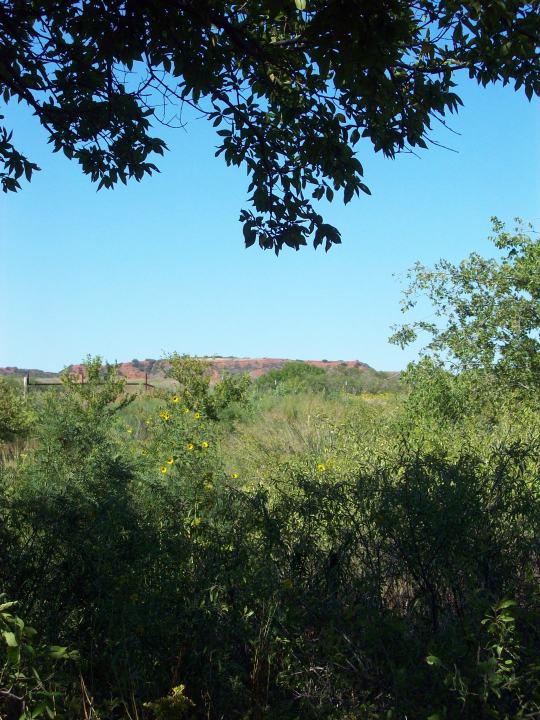
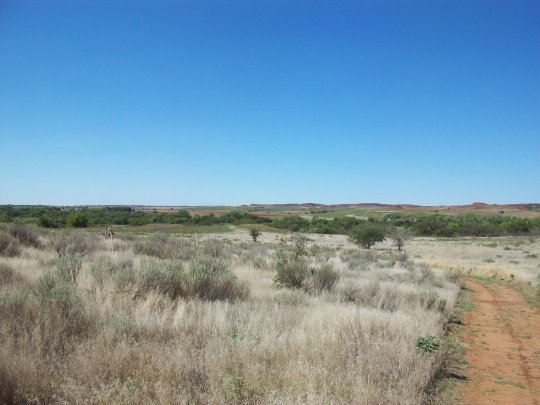
Along the banks of the Washita River, 2015.

With winter coming, many of the tribes settled along the banks of the Washita River (or Lodgepole River, as named by the tribes because of the numerous trees) Black Kettle’s village of around 250 was the western most settlement.  The Army had been stationed near Fort Cobb in western Indian Territory.  General Philip Sheridan decided on a “winter campaign” against the tribes to try and get them to surrender.  So in late November 1868, the general ordered Colonel George Custer and the 7th U.S. Cavalry to attack Black Kettle’s village.  Early on the morning of November 27, 1868 Custer’s forces converged on the village and in no time had taken control.  Black Kettle and his wife were amongst the first killed.  The exact death toll isn’t known but it is believed that around 50 Cheyenne were killed along with 21 soldiers.  To keep any of the Cheyenne from escaping, Custer also ordered over 700 horses to be slaughtered and dumped in a ravine.  He then took the surviving women and children as prisoners and burned he camp.

Washita Battlefield 5

Site of Black Kettle’s Southern Cheyenne 1868 winter camp, 2015.

So with this kind of history it’s obviously a sad place to visit.  The location was put on the National Register of Historic Places in 1966 and in 2007 the state built a new visitor center and museum.  After you walk through the museum, you can go out to the site and walk the 1.5 mile marked trail.  It wasn’t a long walk but it can give you the creeps especially near the reported location of the horse grave.  You can see where the army scouted out the village and get an idea of what the land would have looked like around the time of the massacre.  This is a place to take older kids to help them learn about Oklahoma history and since it is part of the park service they do offer a Junior Ranger badge for completing a booklet geared toward different ages.  I would recommend going but make sure you have some walking shoes on.

Hours: Visitor Center open 7 days a week 8am-5pm except for Thanksgiving, Christmas and January 1st.  Overlook and trail open from dawn to dusk daily.

sunflower

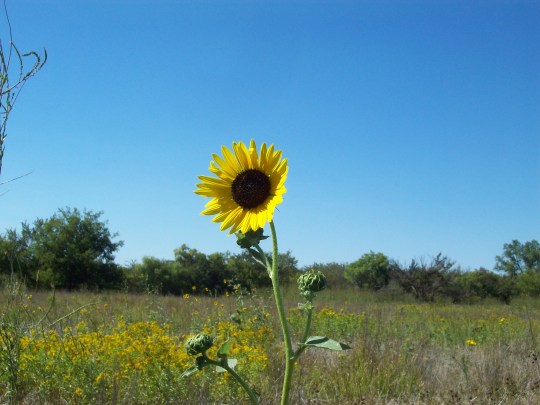
Sunflower on the trail to Black Kettle’s village on the Washita River, 2015.

Museum of the Western Prairie

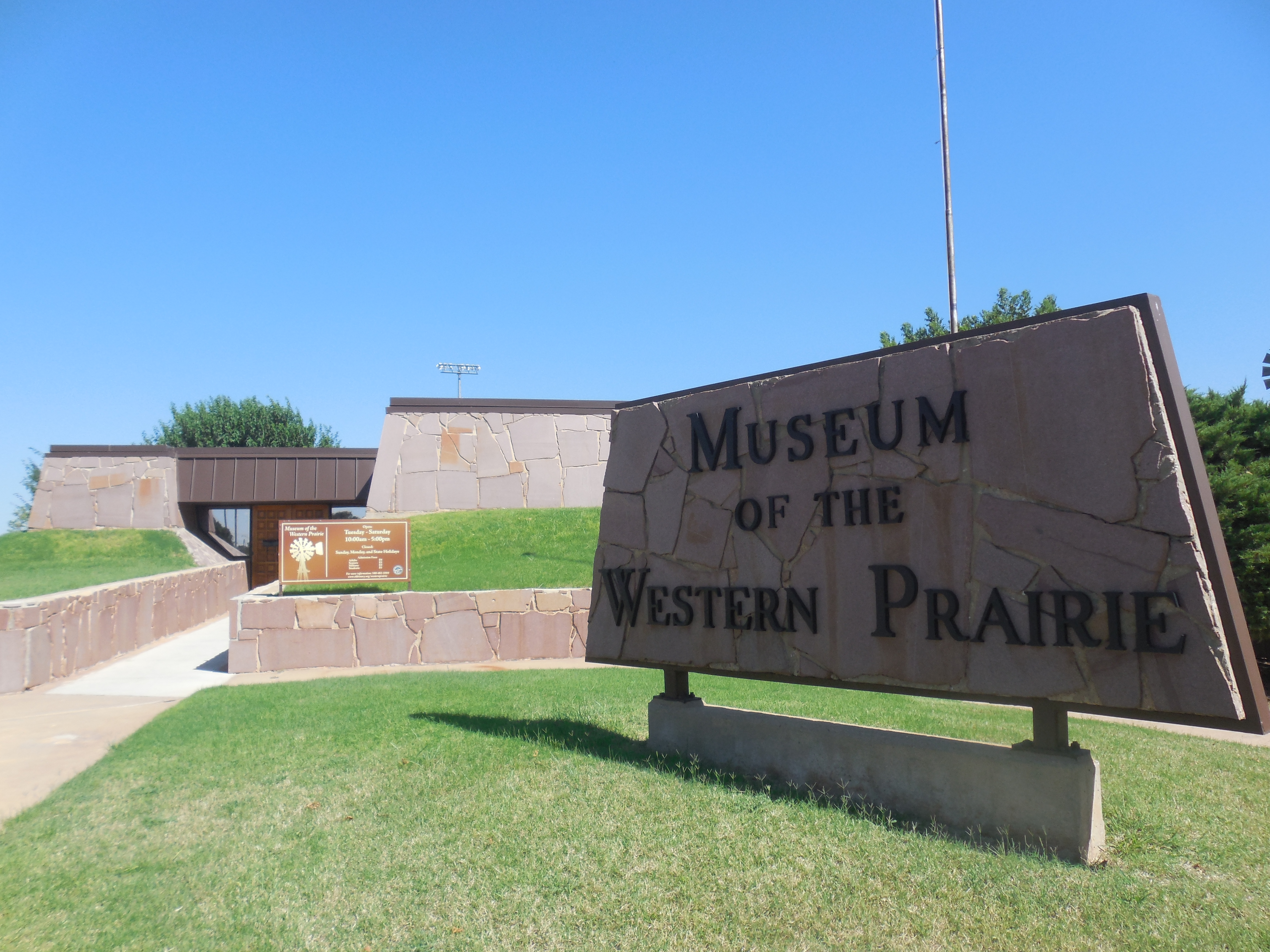
Museum of the Western Prairie in Altus

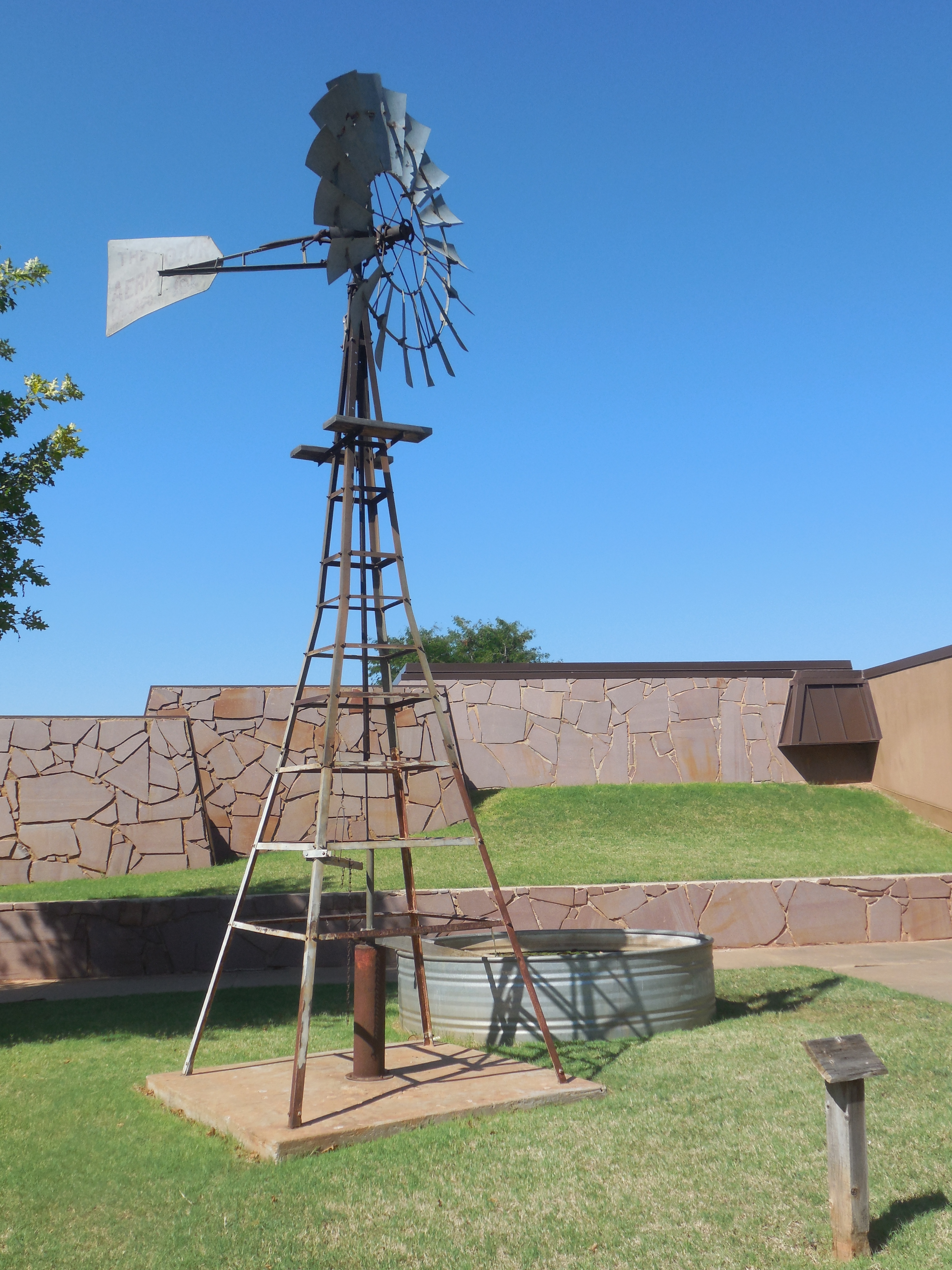
Windmill at the Museum of the Western Prairie, Altus, OK, 2015.

A few months ago I went on a road trip to the southwestern part of the state.  It was August and 104 degrees out but I didn’t care, there were places I wanted to go and see.  I went looking for the Cross S Ranch Headquarters south of Olustee and couldn’t find it.  Eventually later that day I ended up in Altus and had time to visit the Museum of the Western Prairie.

It’s back off the road in a park, a low building with dirt up around it to make it look like an old dugout home from the late 1800’s.  I had been there before many years ago and saw a picture of downtown Eldorado, Oklahoma, that showed the Farley blacksmith shop.  This was the shop that my great-great grandfather Jeff Farley ran in the 1890’s.  So on this visit I wanted to find that picture again and show it to Mae, just to emphasize our family history here in Oklahoma.

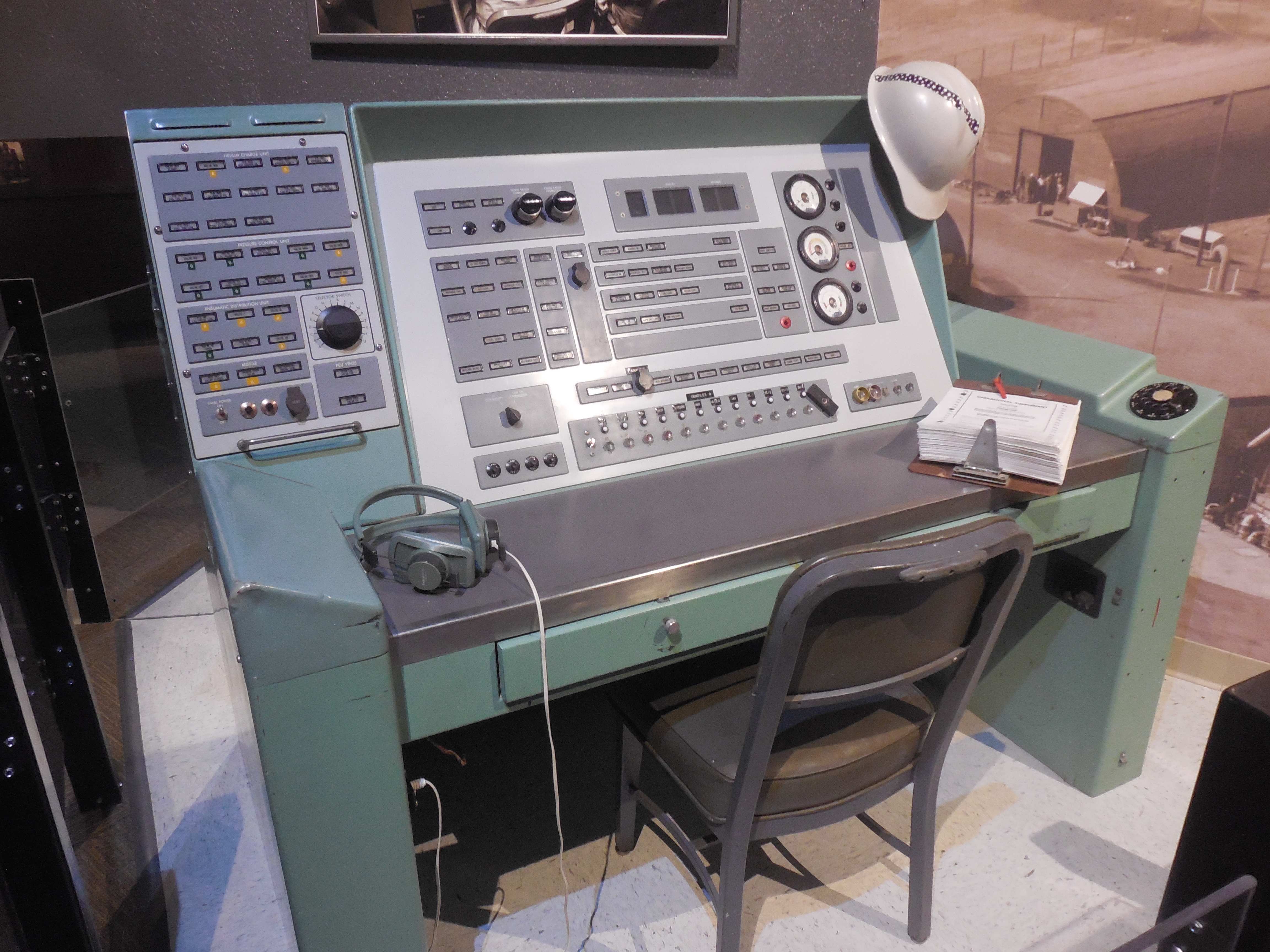
The building had been remodeled a few years ago, so things had changed and the picture was no longer on display, but there were still plenty of other exhibits to show her just how our family lived in that time period.  They had the usual covered wagon and other household items from the time of settlement in Jackson County.  But one of the more interesting items on display was a console from the Atlas missile silos that surrounded Altus and it’s air force base from 1962-1965.

Control board for Atlas rocket in Altus

There is more outside in the courtyard that showcases the history of southwestern Oklahoma.  Windmill, farm equipment, a buggy, and the Criswell half-dugout.  Davis and Sarah Criswell built the half-dugout in old Greer County (now part of Jackson County) around 1900.  This dugout is a great example of what a family home looked like out on the western prairie.  But also in this courtyard is where I finally found the Cross S Ranch Headquarters building.  It’s still in the process of being restored (for more info read my previous post about the history of this building).

The museum was started in 1966 when the Western Trail Historical Society started raising money to build a museum in Altus.  The building was completed in 1970 and officially became a Oklahoma Historical Society field museum in 1973.  The Criswell half-dugout was placed there in 1976 and the Cross S Ranch Headquarters was rebuilt there in 2009.

So if you’re a history nerd like me or just want to get an idea of what life was like on the western prairie around the turn of the century, stop and check this museum out.  Takes about an hour to see everything.  Older kids might like it but younger kids would probably be bored, not a lot of kid type stuff to do.  I do hope the next time I visit they have that Eldorado picture back out.

Address: 1100 Memorial Drive, Altus, OK.  From Main Street (or State Highway 6), turn east on Falcon Road, then go less than a quarter of a mile to Memorial Drive.  The museum sits at the end of the road.

Hours: Tuesday- Saturday 10am-5pm.

Museum of the Western Prairie in Altus 3

Haunted Fort Washita

Bre's Late October 2015 159

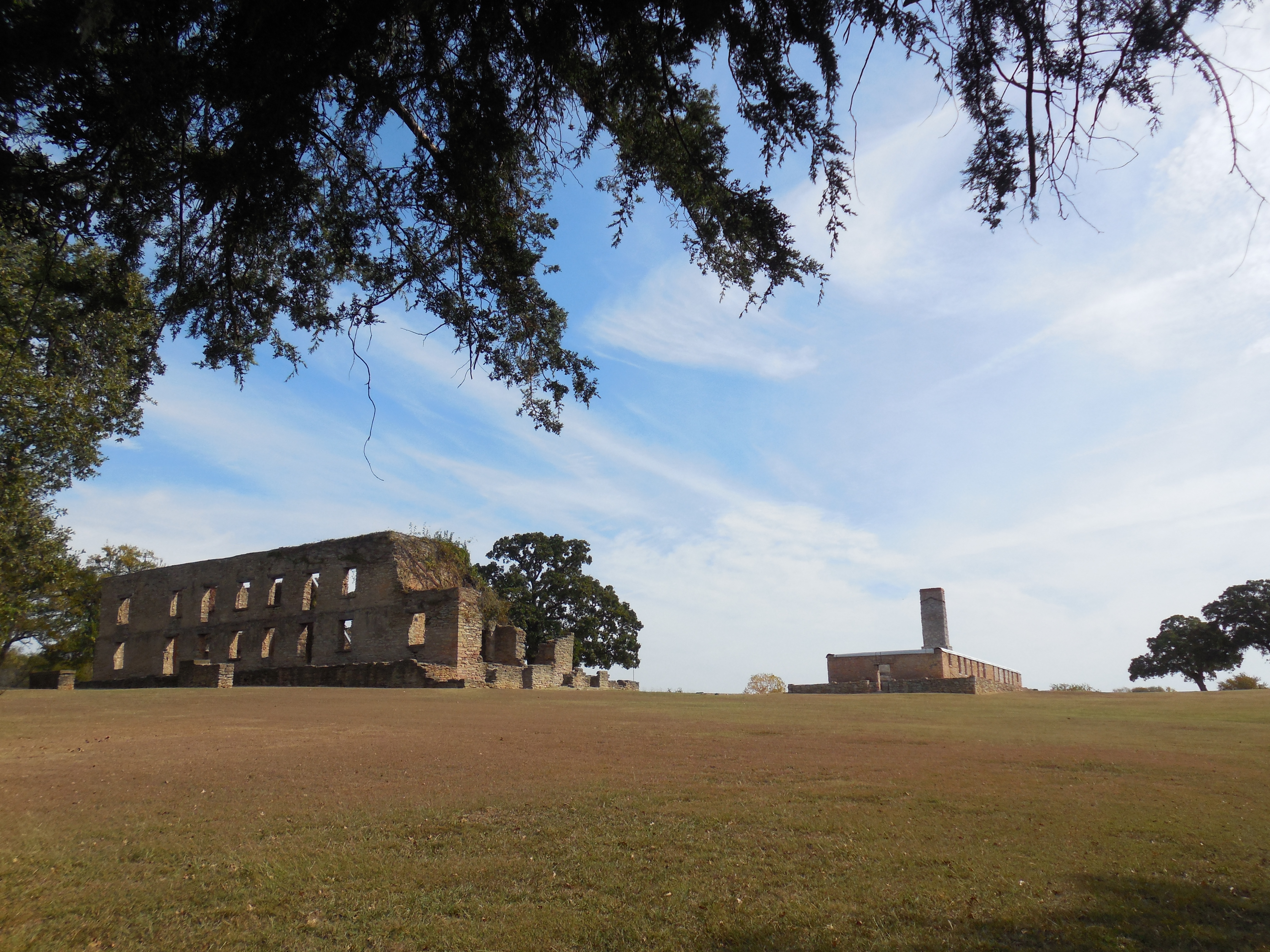
The west and south barracks at Fort Washita, OK, 2015.

Hey, it’s the week of Halloween so let’s have some fun and talk about one of the most haunted places in Oklahoma- Fort Washita.  I had heard the stories for years, ghosts wandering the property, strange experiences, weird feelings.  So back in 2002, we decided to visit (this was before children) and yeah, the place definitely had a creepy vibe.  We never actually saw a ghost or had anything unexplained happen to us, but we both felt like someone was watching us the whole time we were there.  After that visit we have talked about the place just giving us the creeps and that we never wanted to go back.  So like morons, we went back a couple of weeks ago, taking Mae with us this time just to see if a pre-teen girl could get the spirits worked up.

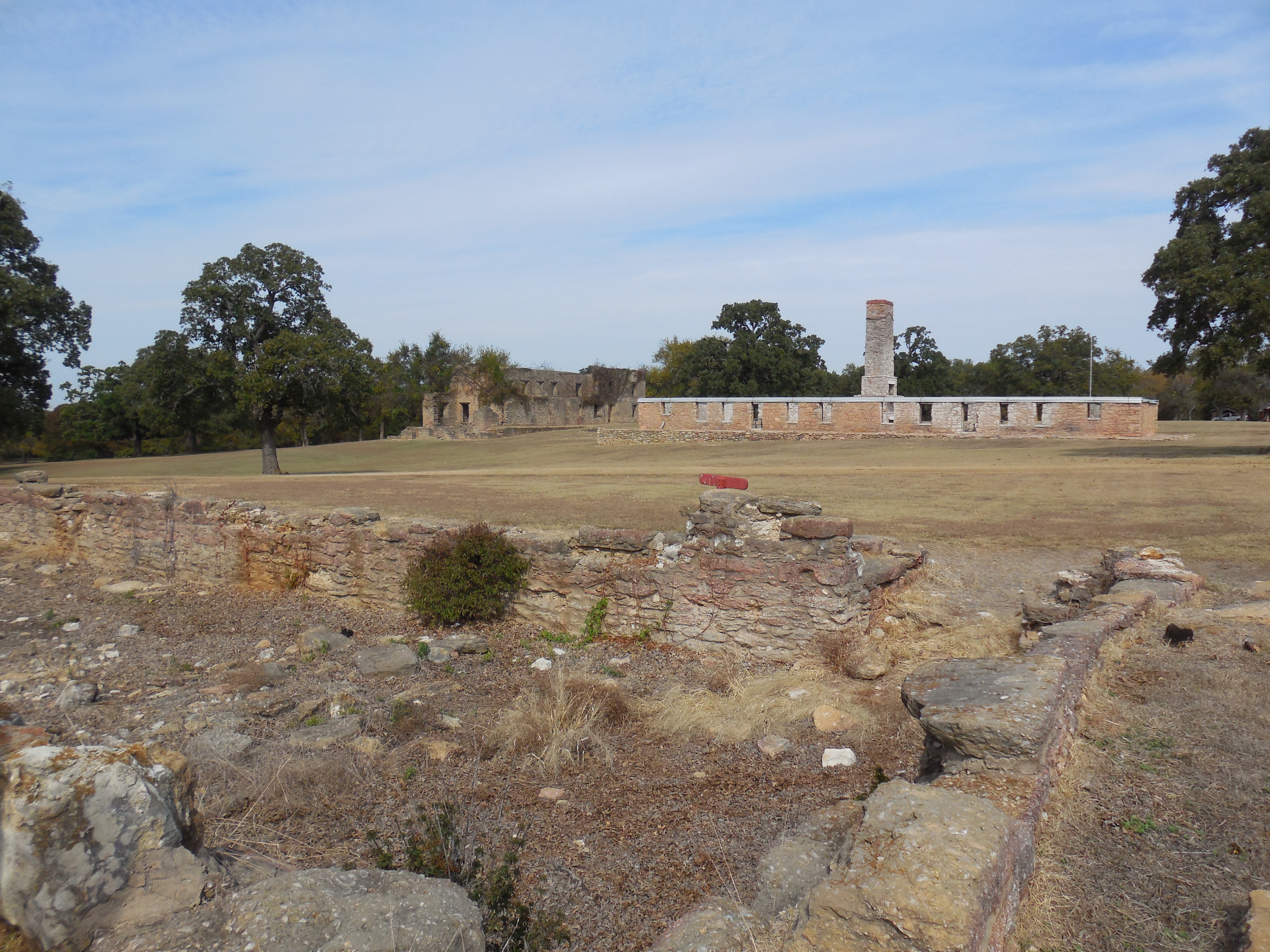
The fort was placed on top of a hill not far from where the Washita River joins the Red River in 1842.  It was built by the military to protect the Chickasaws and Choctaws from other Indian tribes.  The original fort was spread out over an area of seven square miles and contained almost 100 buildings constructed from locally quarried limestone.  By 1861, the fort was abandoned and taken over by confederate troops as a supply post.  Although no battles were ever fought here, near the end of the war the confederates burned the buildings and abandoned the post.  The United States military turned over the property in 1870 to the Chickasaws who then allotted the land to the Colbert family.  The state of Oklahoma took over ownership of the land in 1962, this is when the historical society added the front entrance and started work on the reconstruction of the south barracks.  In 1965 the fort was placed on the National Register of Historic Places.

Bre's Late October 2015 170

The south and west barracks in background with remains of the commissary in front, Fort Washita, OK, 2015.

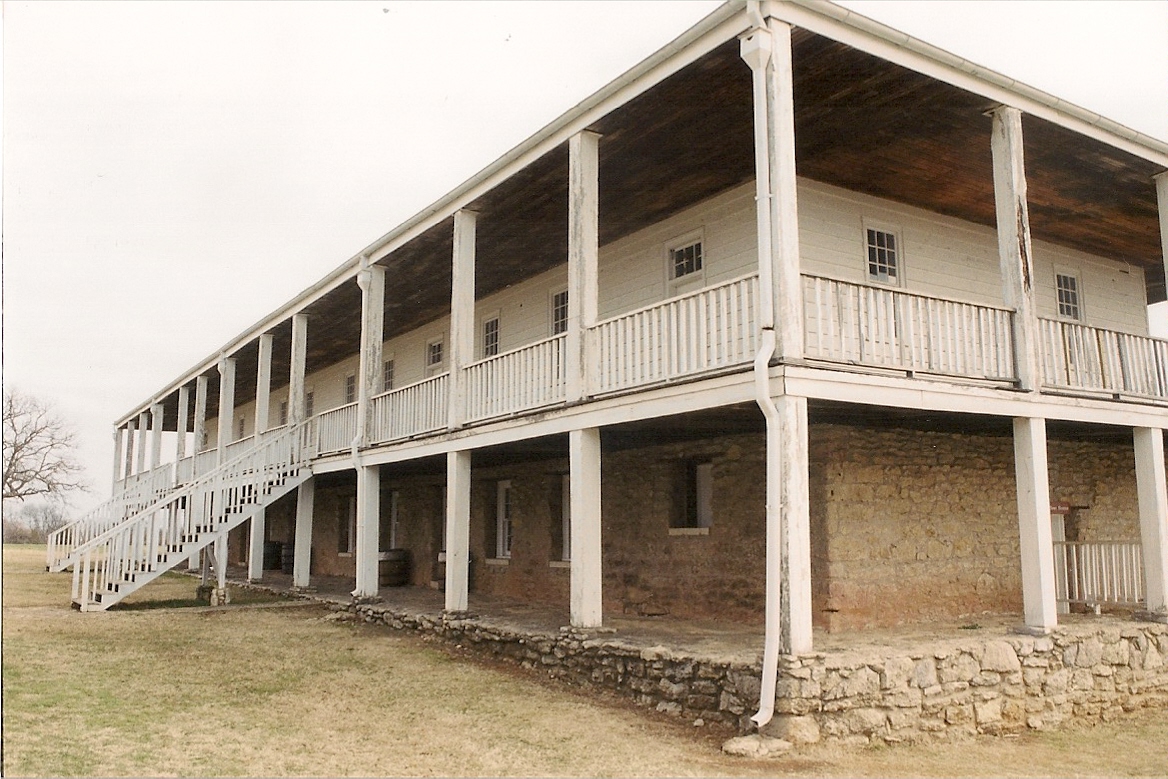
As I said earlier, my first trip was in 2002, you can walk or drive around the ruins.  The south barracks weren’t open to tour but you could go in the rebuilt chaplains’ quarters and the D.H. Cooper cabin.  On this recent visit we discovered that the rebuilt south barracks had burned down in 2010 but everything else was the same as before.  I didn’t get that same strange feeling I had the first time and neither did my husband, even though he told me later at one point near the old post road he heard “thundering hooves”.  I didn’t hear or see anything and neither did Mae even though she kept her guard up.  I was hoping that at least one ghost would come and scare her.  It’s an interesting place to visit and if you see a ghost or hear something unusual don’t be surprised.  The fort is in far southern Oklahoma near Durant and Tishomingo off state highway 199.

south barracks Fort Washita 2002 2

South barracks at Fort Washita before they burned in 2010, Fort Washita, OK, 2002.

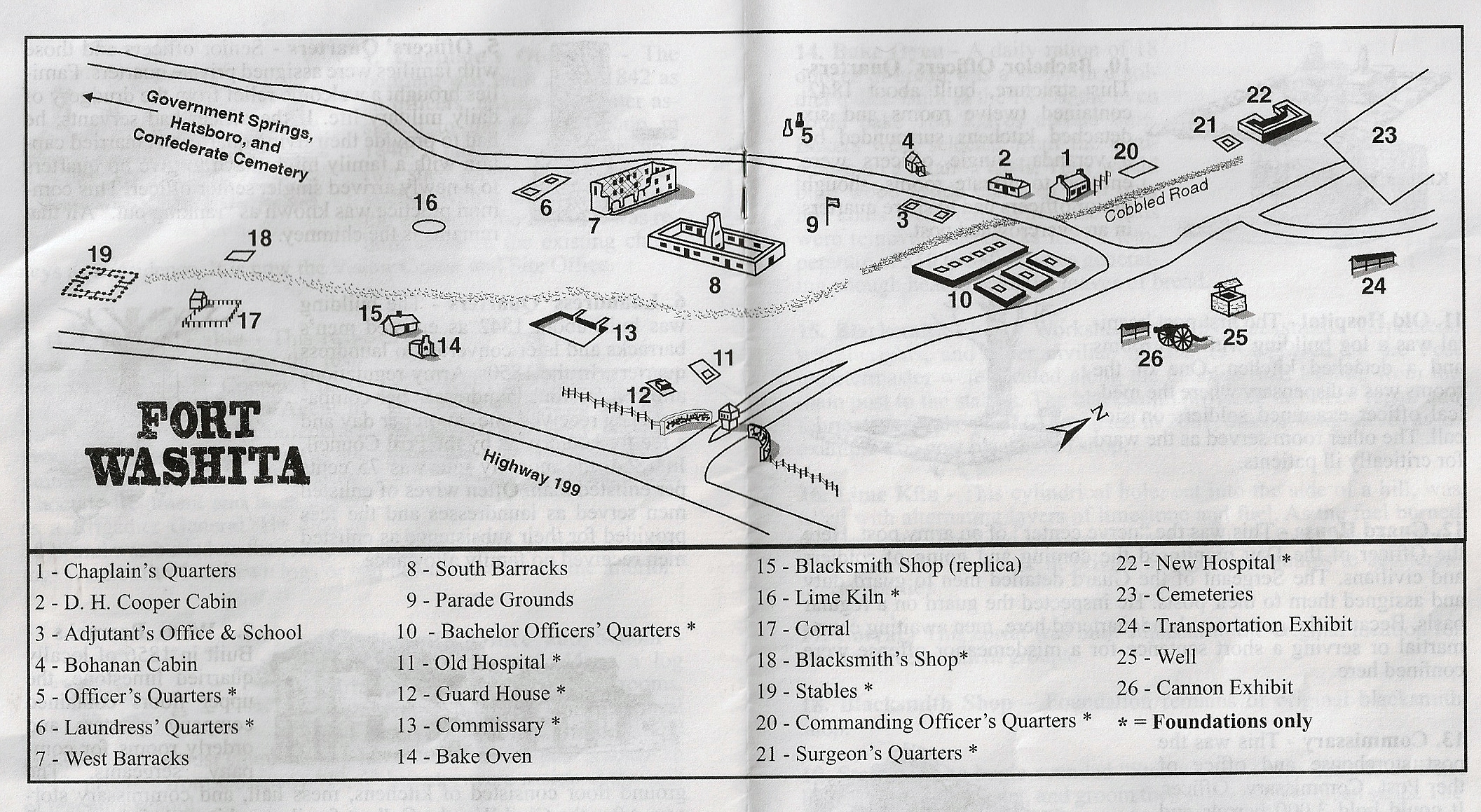
Fort Washita

Map of Fort Washita, 2015.

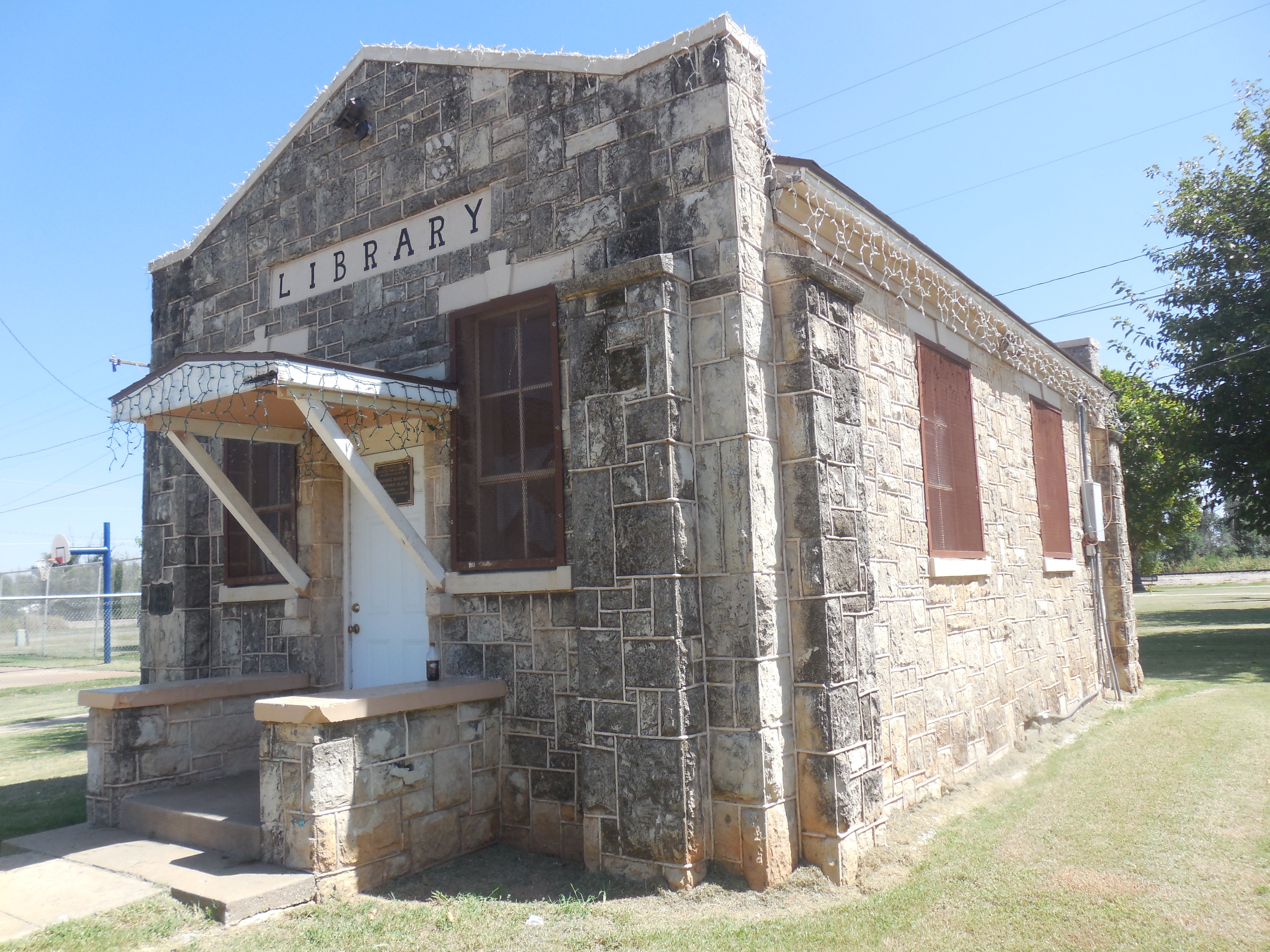
Olustee Public Library and Park

Olustee library

If you ever find your self having to go down Oklahoma Highway 6 in the far southwestern part of the state, you will go through the tiny town of Olustee.  As you enter the town you will go right past the library and park and except for a small sign you might not know it’s on the National Register of Historic Places.

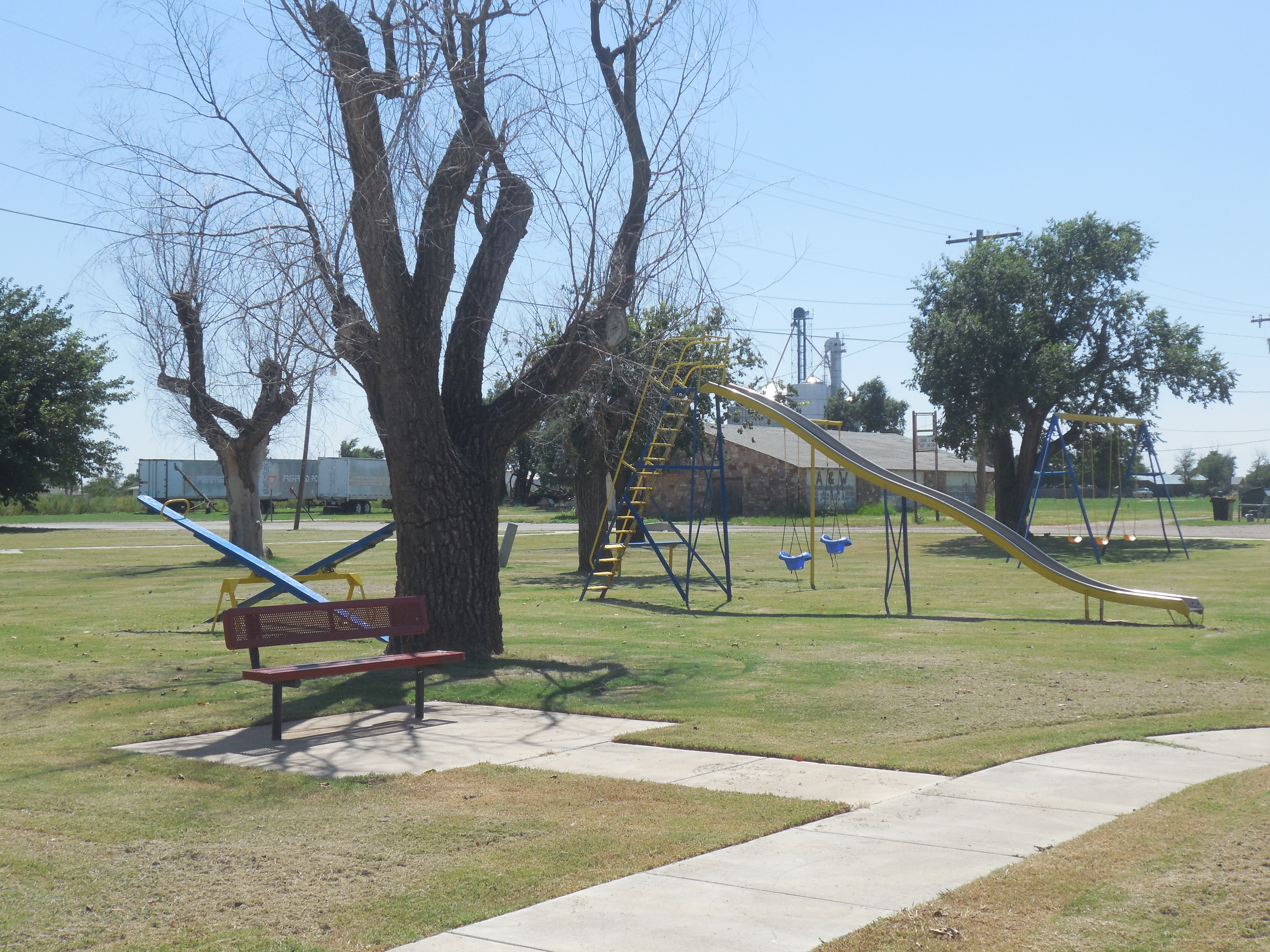
The park itself is interesting enough- a full block with old style playground equipment, you know, the stuff most people my age played on before the safety nazis took over.  You have the big old metal slide, teeter-totter, and swings.  There is an old Frisco caboose sitting in the northwest corner of the park and a sidewalk trail that leads around the whole park.  The park came into existence in 1920 when the New State Womens Club developed the property to help improve the quality of life in Olustee.  The Womens Club had been formed in 1907 to help establish a library and park in the small town.

Throughout the 1920’s members of the club took care of the park by planting trees and in 1925 the club turned over ownership of the property to the town of Olustee. Plans were made in 1921 for a small building to be placed in the middle of the park to be used as a library.  But the depression slowed the development of that plan.  In 1936, two members of the Womens Club met with representatives from the Works Progress Administration to see if they could get help with the library project.  It was approved quickly and work started on the building in April 1936 with the stone quarried from a local farm.  Since 1907 there had been temporary locations for a library in Olustee and by August 1936 a permanent building was done and filled with books donated not only by the Womens club but other residents of the community.  The New State Womens Club maintained not only the library but the park from the opening until the 1990’s.  At that point the library closed, with all the books and town records still inside.  The library and park were placed on the National Register in March of 2008.

I would love to go in the building, just to see the records and journals left behind.  The park is just a normal park.  I tried to get Mae to go down the slide, but it was 106 degrees out and she had a dress on, so it wasn’t happening.  It’s an interesting stop if you happen to be in that area.

Olustee library 6

Olustee Public Library, Olustee, Oklahoma, 2015.

Olustee park

Olustee Park, Olustee, Oklahoma, 2015.

The Edmond Right-Of-Way Graves

Bre's mid Oct 2015 018

So everyone knows that the intersection of Broadway and 33rd Street in Edmond is bad.  Poor design, too much traffic, and lights that never seem to change.  I hate that intersection and try to avoid it at all costs but when I do get stuck there, I wonder if the traffic troubles in the area are a ghostly legacy of the two men buried near there.  What?  What do you mean?  There isn’t a cemetery near there, can’t be any graves.  Well that is where you are wrong, they aren’t easy to get to but yes, there are two graves just northwest of the intersection along the railroad tracks.

Let’s go back to 1886, surveyors for the Southern Kansas Railway (later part of the Santa Fe Railway) picked a location at mile marker 103 (it means one hundred and three miles south of Arkansas City, Kansas) for a coaling station on the rail line.  A few months later in September the crews came through to “scrape” the land and prepare the grade for the rail line to be laid.  On September 17th, two members of this crew, Frank Mosier and Willie Davis were killed in a fight and then buried along the rail line just a few miles south of marker 103.  What was the fight about?  Did they kill each other?  Was there really a fight?  Did they die of something else, disease or heat exhaustion maybe?  Many historians have tried to uncover the truth but what really happened to these two men is lost in time.  All we really know is that the two men were buried along the railroad right of way, side by side.

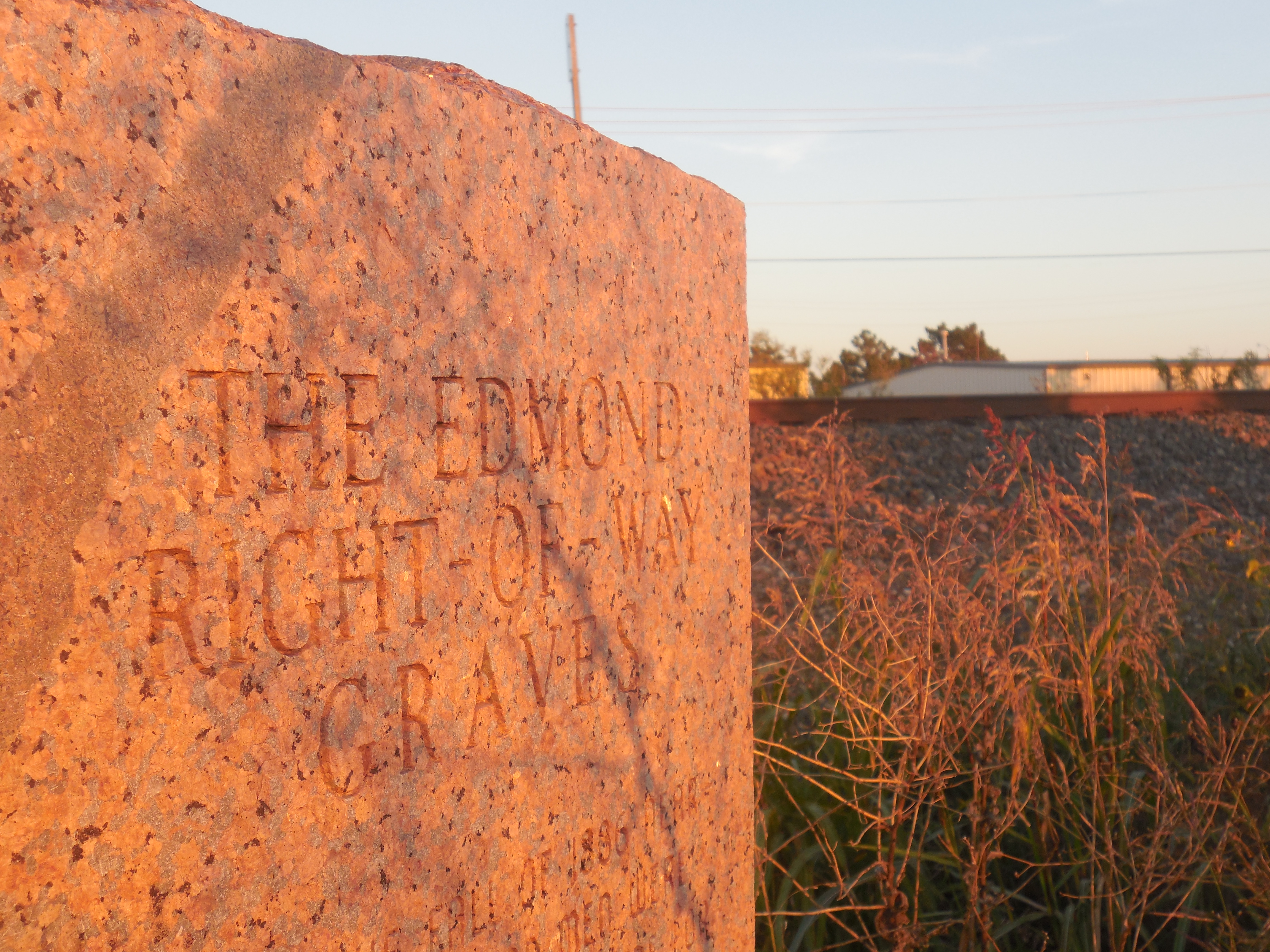
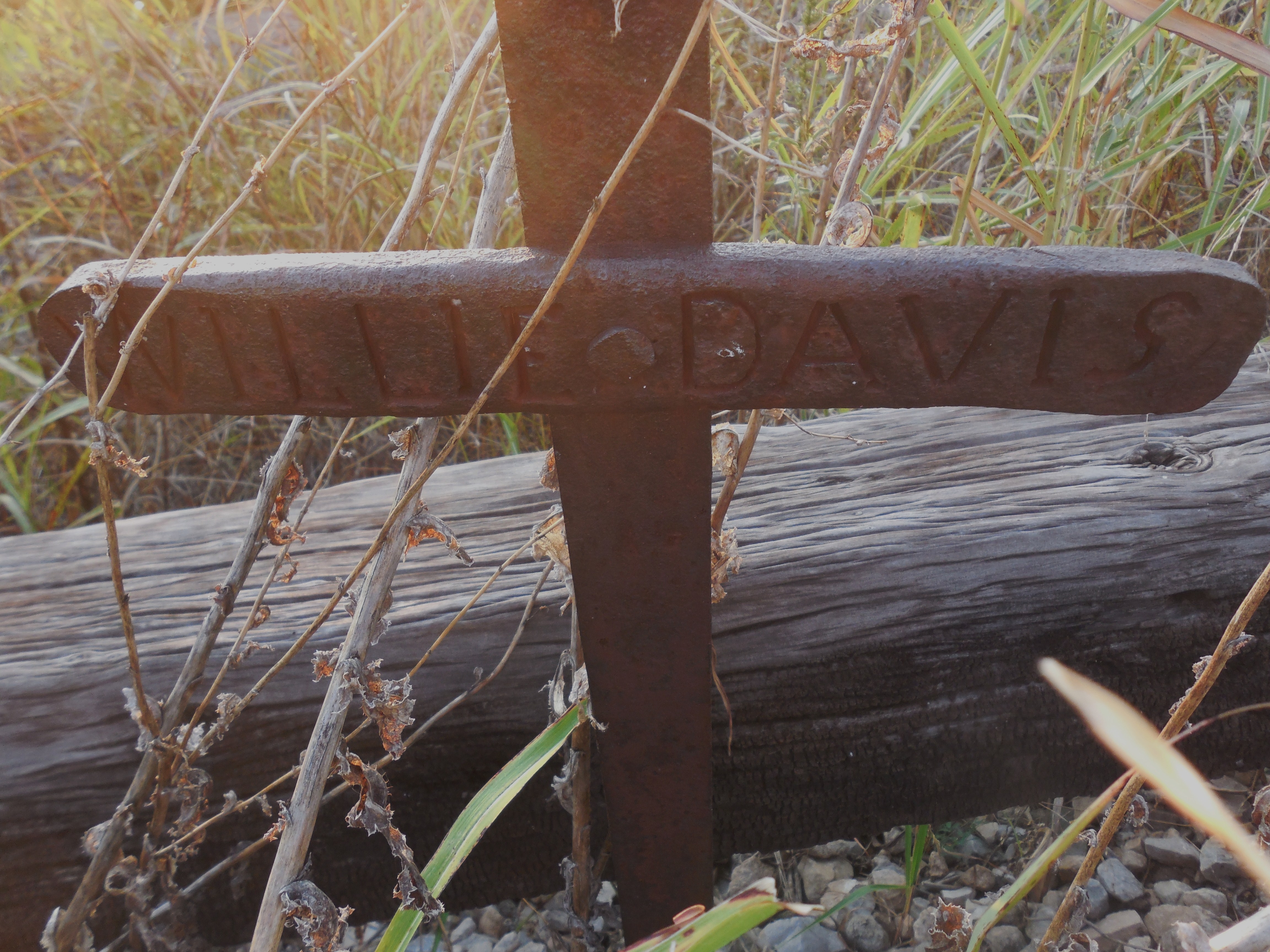
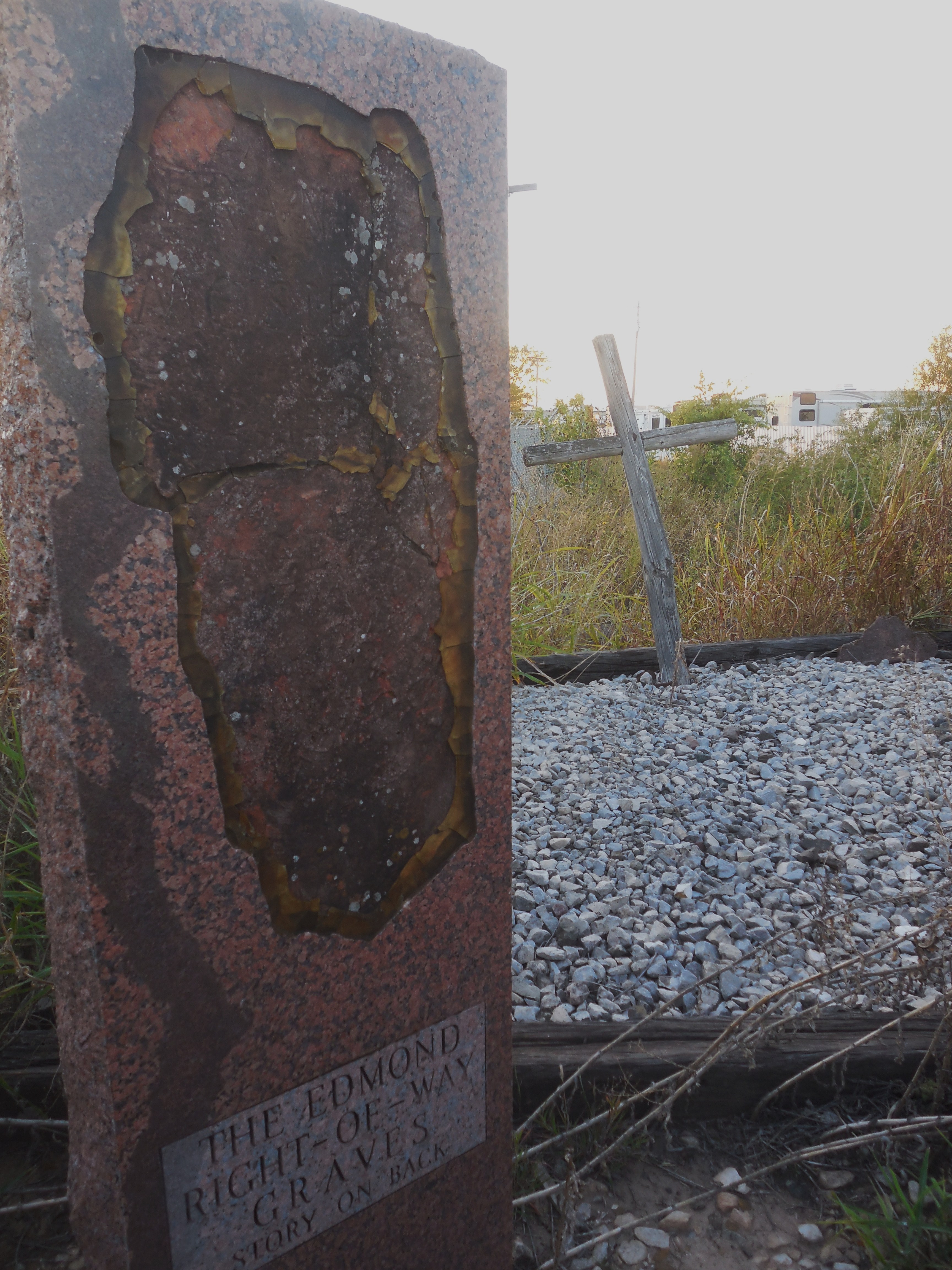
For many years the railroad tended to the graves.  There were two markers for the men, Willie Davis has a small iron cross and Frank Mosier had a stone with his name carved into it.  But as time went on, the graves had become overgrown with weeds and grass.  There have been some people who tried to take care of the graves but with the development of Edmond it was hard to keep the location clean.  At some point vandals broke Mosier’s stone and scattered the pieces in the field.  Some Edmond residents put up a wooden cross and someone has put gravel over the graves.  In 1979 the Oklahoma Historical Society put a granite marker at the site and embedded Mosier’s stone into it.  The Santa Fe railway still owns the site but has not done a good job tending to it.

This is not an easy place to find.  There is really no way to the graves.  You can try to park along the businesses that backup to the rail line but there is a very big ditch to get through in order to get to the tracks.  The other option is the one I took, park at the business on 33rd Street, then walk the rails around the curve to the site.  I will warn you- this is not safe and possibly illegal.  It is a blind curve and if you aren’t paying attention the train can come around very quickly.  I went to the site on a slow rail traffic afternoon, so I was lucky but it was still scary and any little noise sent me down the rail grade to the ditch.  I’m also not going to say the site is haunted, but I just wanted to get out of there, felt very uncomfortable.

So every time you are around the intersection of Broadway and 33rd Street in Edmond, look to the northwest at the railroad track and think about the two men who lost their lives and now reside permanently in that location.  Maybe they are “controlling” the traffic flow at that intersection.

Bre's mid Oct 2015 014

The grave marker of Willie Davis, Edmond, Ok, 2015.

Bre's mid Oct 2015 021

The granite marker with Frank Mosier’s headstone embedded next to the grave site, Edmond, OK, 2015.

The (Used to Be) Great State Fair of Oklahoma

OKC from space needle 3

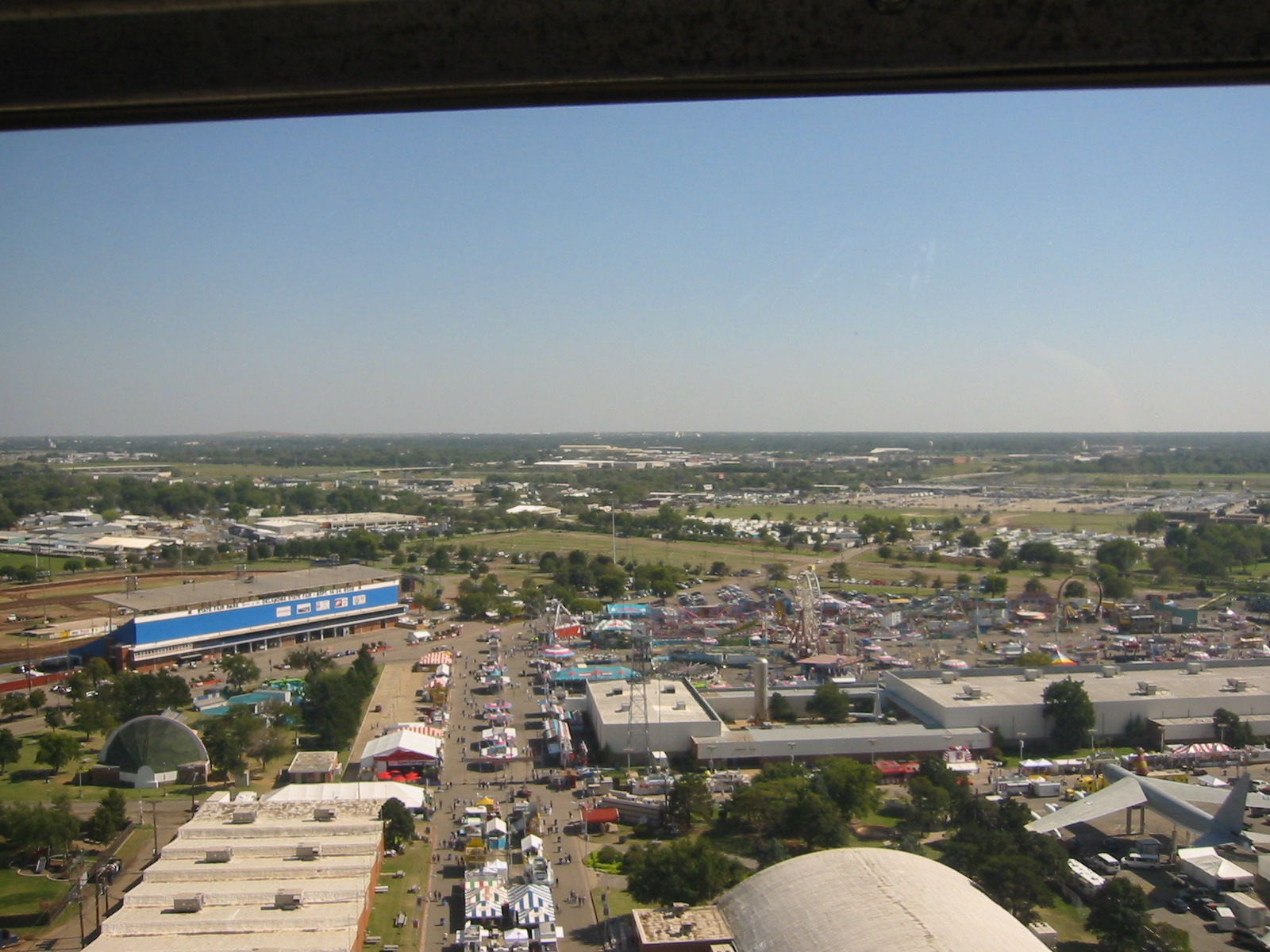
View from the Space Tower in 2006, at the time I didn’t realize how much of this history would be gone.  You can see the Grandstand in blue on the left, the old Travel and Transportation Building and Clock Tower in the middle, and the B-52 on the right.

Every fall in Oklahoma means that not only has football season started but that it will be fair time in Oklahoma City.  I used to love going to the fair, it was like going to a special playground once a year with lights and food.  As I got older I loved going to see those old landmarks that brought back great memories, riding the monorail and the space needle.  Now almost everything is gone; the monorail, the grandstands, several buildings, the waterfall in the flower building, and even though it’s still there, the space tower sits empty and broken.

Let’s start at the beginning, the first “fair” in Oklahoma City was in 1889 a few months after the land run.  A small group of residents, with the names of Charles Jones, Ed Overholser, H. G. Trosper, and D. F. Stiles, organized the first Oklahoma Territorial Fair.  They bought some land on the northeast corner of Santa Fe and Reno Avenues, then built some buildings, such as a racetrack.  This fair was successful for a few years until the economy started to fail and the population dropped, so it was discontinued in 1894.

Every once in a while for the next few years there would be various street fairs but nothing like an official fair with a designated time and location.  This changed in January of 1907 when Jones along with Charles Colcord organized a state fair association.  A new location was chosen for the fairgrounds at the southeast corner of Eastern Avenue and NE 10th Street.  The first fair was held on October 5th of 1907, just a month before statehood.  There were of course the usual farming and agriculture exhibits, carnival attractions, but the biggest draw was the horse racing on a half-mile track.  Even though the racing stopped in 1913 when the state legislature banned it, there was still plenty to do such as watch car races, ride hot air balloons, or enjoy an air show.  Of course there were lean times during the great depression but the fair still went on.  There was talk of moving the fairgrounds, the location was too small, not enough parking, and at times problems with flooding.

OKC from space needle

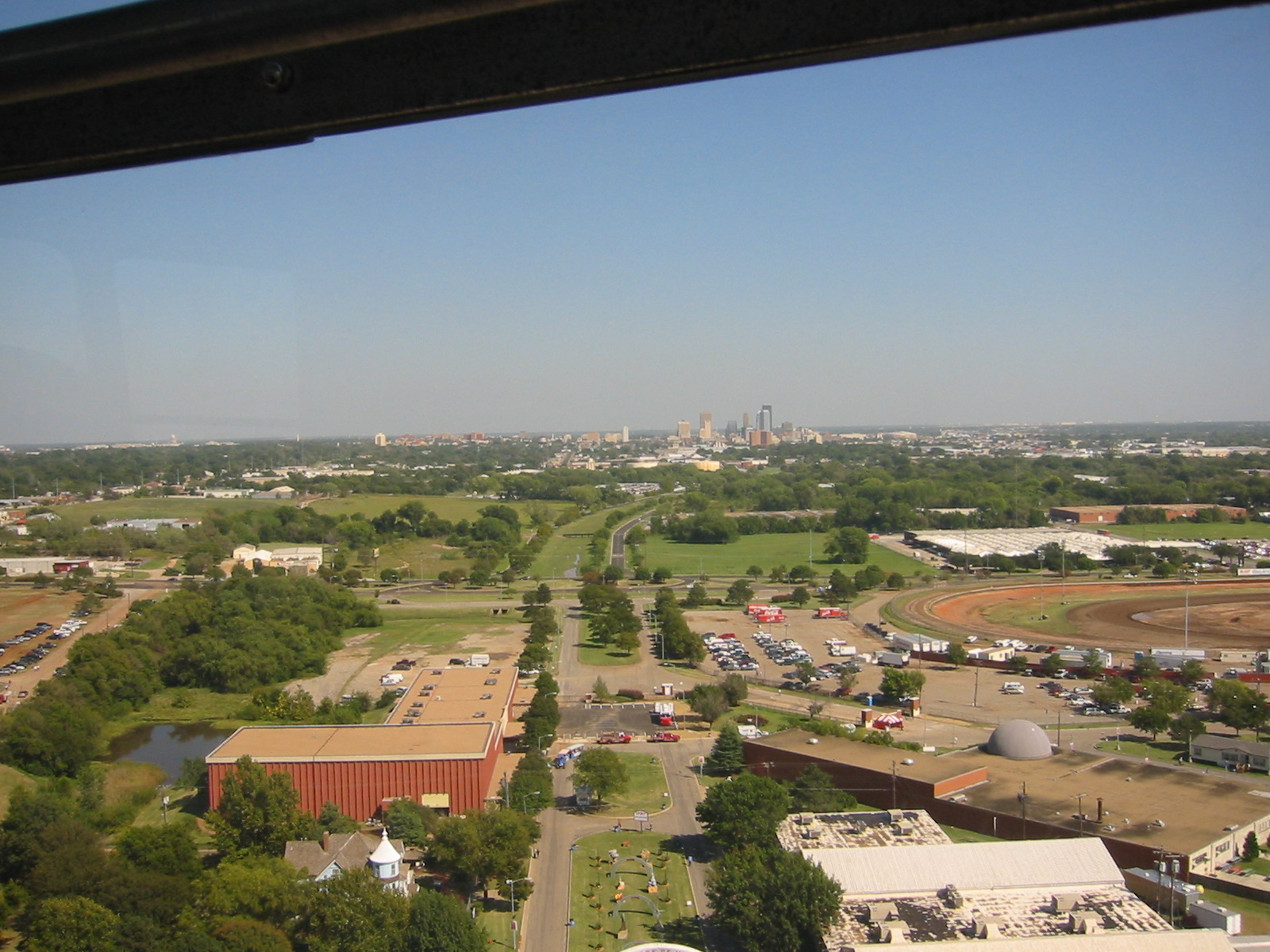
Another view from the Space Tower in 2006, on the left near the bottom of the pic is the old Goodholm Mansion and behind that the Flowers and Garden Building.

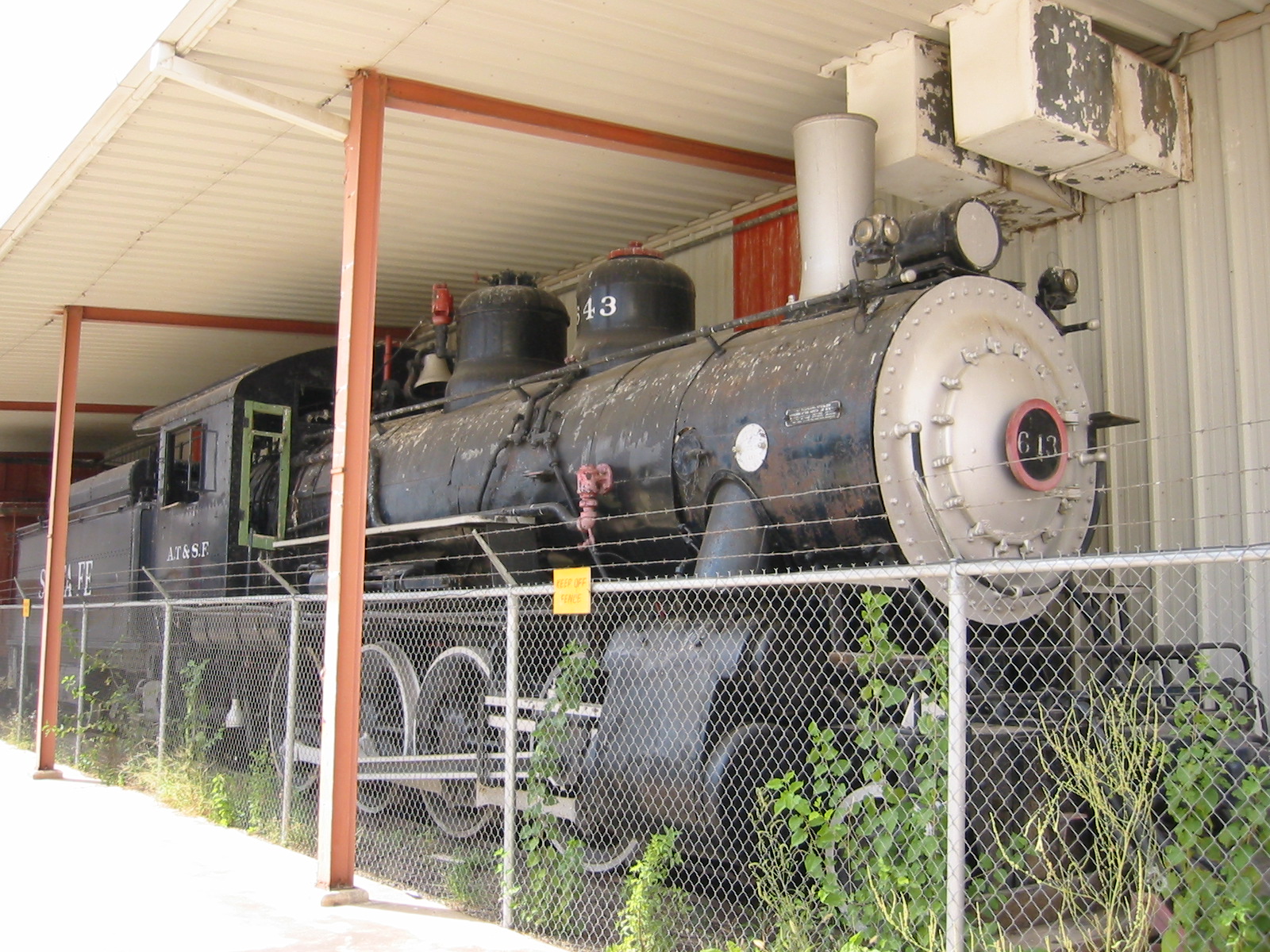
These issues were finally addressed in 1951 when the city acquired land between Reno Avenue and NW 10th Street west of May Avenue, which had been the old Sandlot Baseball Park.  The new location hosted its first fair on September 25, 1954.  This is when the grandstands were built with an oval racing track and just south, a drag strip which hosted the National Championship Drag Races in 1957-1958.   Many other buildings were built around this same time such as the 4-H and FFA buildings, the Made in Oklahoma Building, Women’s and General Exhibits Building (now known as Modern Living and Creative Arts Building), Appliance Building (now known as the Kitchen’s of America or Centennial Building), and some of the agriculture barns.  In 1964 the monorail makes its first trip around the fairgrounds and a year later the State Fair Arena (also known now as Jim Norick Arena or “the big house”).  1968 is the first trip into the air on the Arrows to Atoms Space Tower with the Travel and Transportation building to follow the next year after being built around Santa Fe engine #643.    In 1977 the Clock Tower is built from an old oil derrick, in 1978, the Flowers and Gardens Building opens with its waterfall over the doors.  The Goodholm Mansion is moved to the grounds in 1979 after being saved from the wrecking ball.  In 1984 is when we got the big “balloon top” building called the International Trade Center, leaving us all to go in through doors that helped regulate the pressure inside and make our ears pop.

Fair Train 2

Santa Fe steam engine #643 sitting in the courtyard of the Travel and Transportation Building in 2004.  It was built in 1879, given to Oklahoma City and placed at the fairgrounds in the 1950’s.  It is currently being cleaned by volunteers at the Oklahoma Railway Museum.

So many of these landmarks are now gone- the B-52 is gone, the big slide is as well, the log plaza has disappeared.  Some have been saved and moved, the planes are all over the country, the Goodholm Mansion is out near Choctaw, and just this summer the Oklahoma Railway Museum got the old steam train.  Even the cow barns smell fresh instead of like cow poo mixed with hay.  You can still get a good corn dog or cotton candy, but so many of the foods have just gotten wilder just to see what you can deep fry next.  So I still pay to go to the fair, it’s just not a fun as it once was, back when it really was a Great State Fair.

dr pepper sign 2

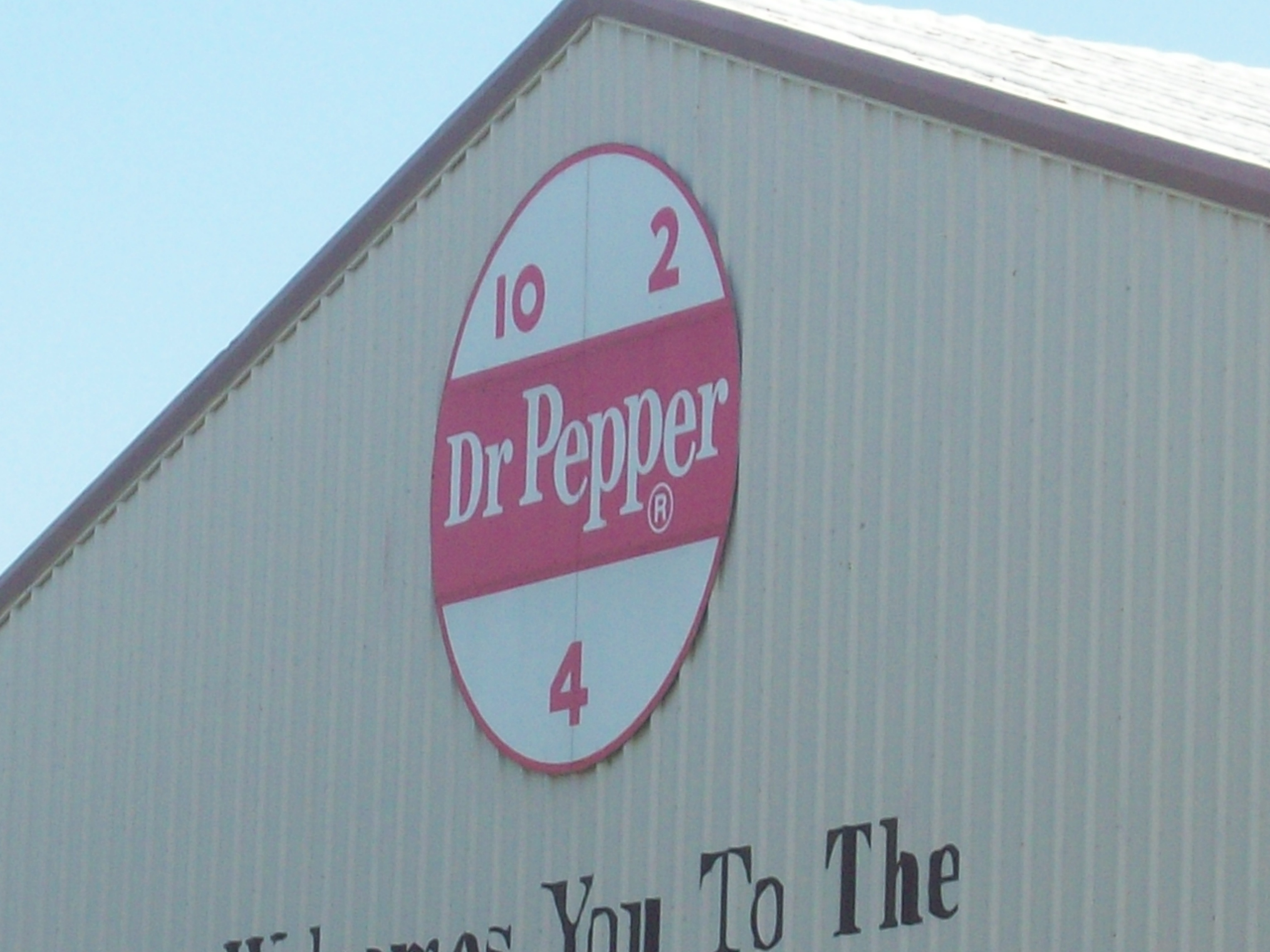
Even this cool old Dr Pepper sign on the back of the Made in Oklahoma Building is gone, 2011.

Cross S Ranch Headquarters

Cross S Ranch Headquarters 3

Cross S Ranch Headquarters, Museum of the Western Prairie, Altus, OK, 2015.

While I was bored over the summer, I found a listing of all the locations in Oklahoma on the National Register of Historic Places.  I then started getting curious, do some of these places still exist?  So just using Google Maps Satellite Images I would put in the address or coordinates to see if the building was still standing or if something had happened.  The majority of the time everything was the same but there are some places that are gone.  Why are they gone?  What happened to them?  Fire, tornado, moved?  So I have set out to find these historic places and give everyone an update.

One of the first places that caught my interest was the Cross S Ranch Headquarters in Jackson County.  It should have been on a country road West of Elmer and South of Olustee but no matter how many times I looked, I could not find a building on this piece of farm land.   So off to southwestern Oklahoma I went, at the beginning of August in 100 degree heat (I’ve never been accused of being smart).  After a short drive through Elmer, trust me it’s a small town, I ended up close to where the ranch headquarters should be.  I was close because the road didn’t look too good and after the rains they had in May and June, I didn’t know what I would find further out.  But I was on the location of Cross S Ranch.

Cross S Ranch

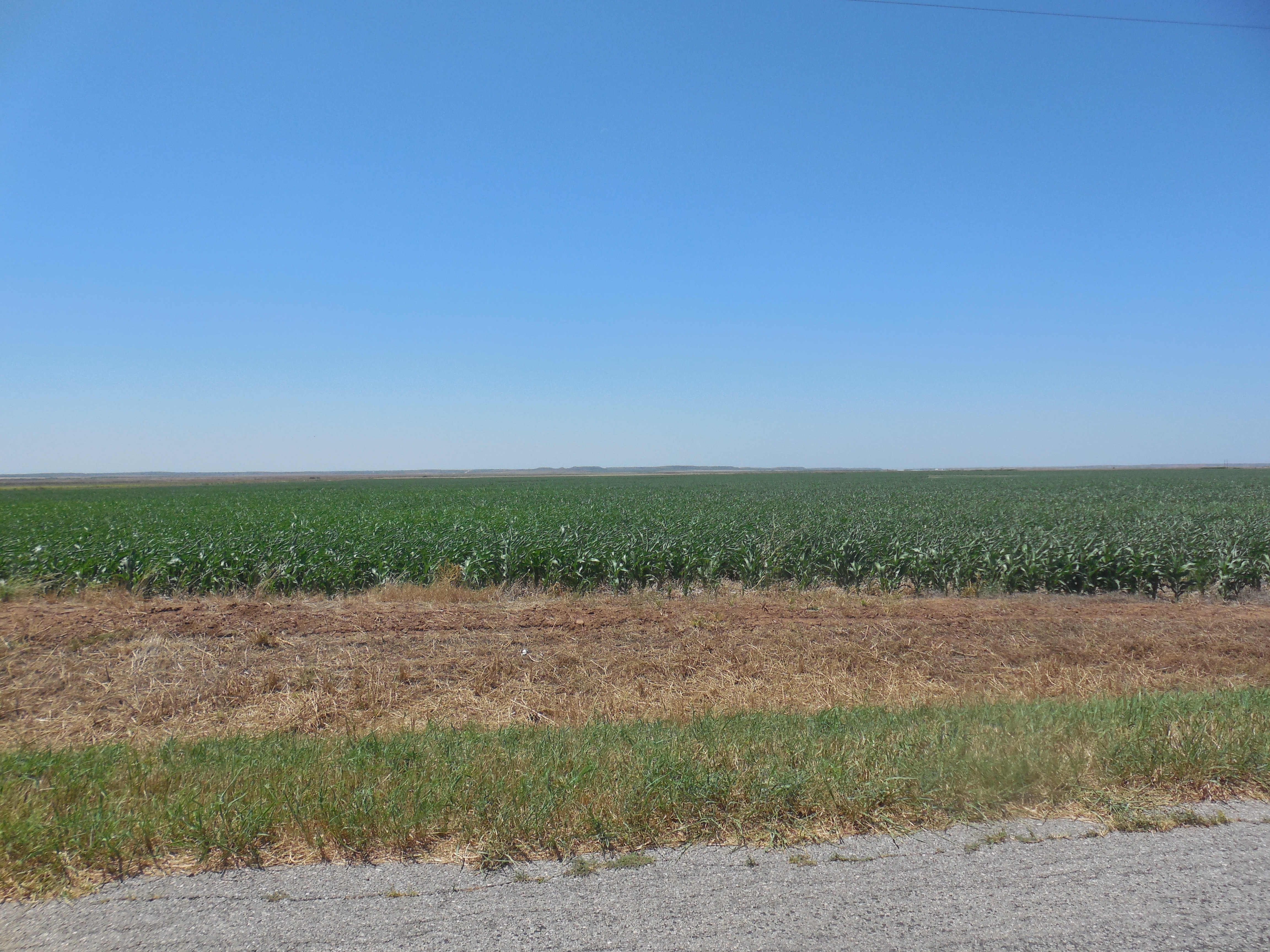
Actual location of the Cross S Ranch, the headquarters building would have been in this field.  Looking to the west from County Road N199, Olustee, OK, 2015.

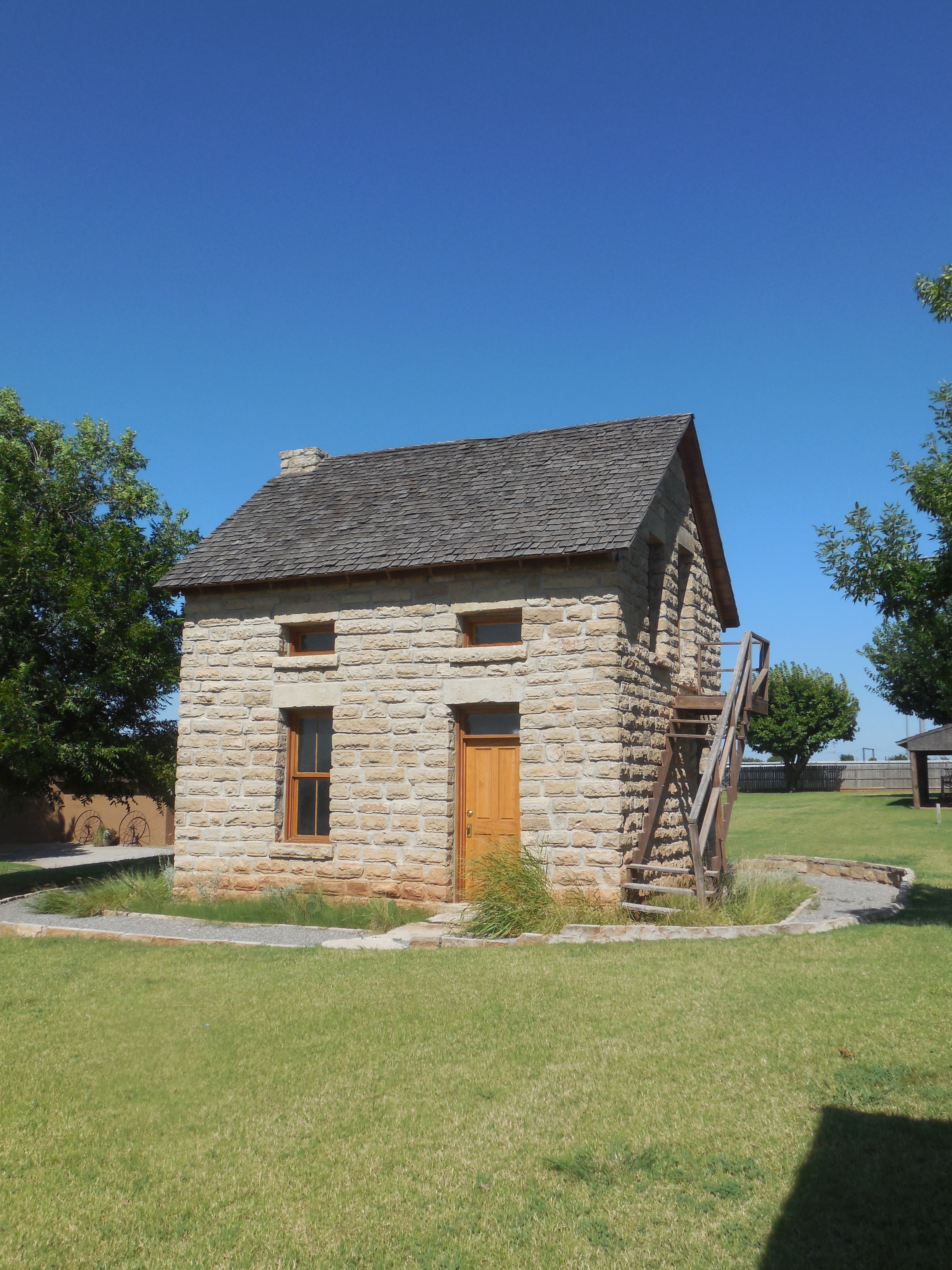
The Cross S Ranch was started on this open prairie in what was then Greer County, Texas by the Eddleman Brothers.  L.Z., Ira and Lee Eddleman started grazing cattle in this very area in 1880.  This was in a time that the cattle could roam free without fences or borders.  In what many believe was 1891, the brothers built the two-story headquarters building out of limestone.  It was not only the headquarters for the ranch but a home for L.Z. Eddleman.  Around 1893 the brothers moved out of cattle ranching and solely into the breeding and breaking of horses.  This continued until the 1900’s when the brothers eventually moved away from the Cross S ranch, onto other ranches they owned not only in Oklahoma but around the country.  L.Z. Eddleman did still own the Cross S and used it from time to time at this point, mostly for farming.  The headquarters building was still used as a home until the 1930’s and afterward may still have been used by members of the family for various reasons, such as family reunions.  By the 1970’s the ranch was no longer owned by the Eddleman family and the headquarters had been abandoned.

In 2006 the ranch headquarters was included on the National Register of Historic Places.  But the building was in horrible shape, the roof was falling in, the second story floors had rotted away, and the stone blocks were collapsing.  That is when the Museum of the Western Prairie in Altus moved in, raising money to have the headquarters building moved.  In 2009, they started dismantling the stones and moving everything to Altus, where the building was then reconstructed.  This is why I couldn’t find it, the building had been moved, it is now rebuilt in the courtyard next to the museum.  It is nice the way it’s been refurbished but I think I would have liked to have seen it restored on the prairie where it had been.

If you want to go look for it, you can find it at the Museum for the Western Prairie in Altus, 1100 Memorial Drive.   The original location of the ranch can be found 5 miles south of Olustee west of the intersection of County Roads N199 and E1750.

inside Cross S Ranch Headquarters 2

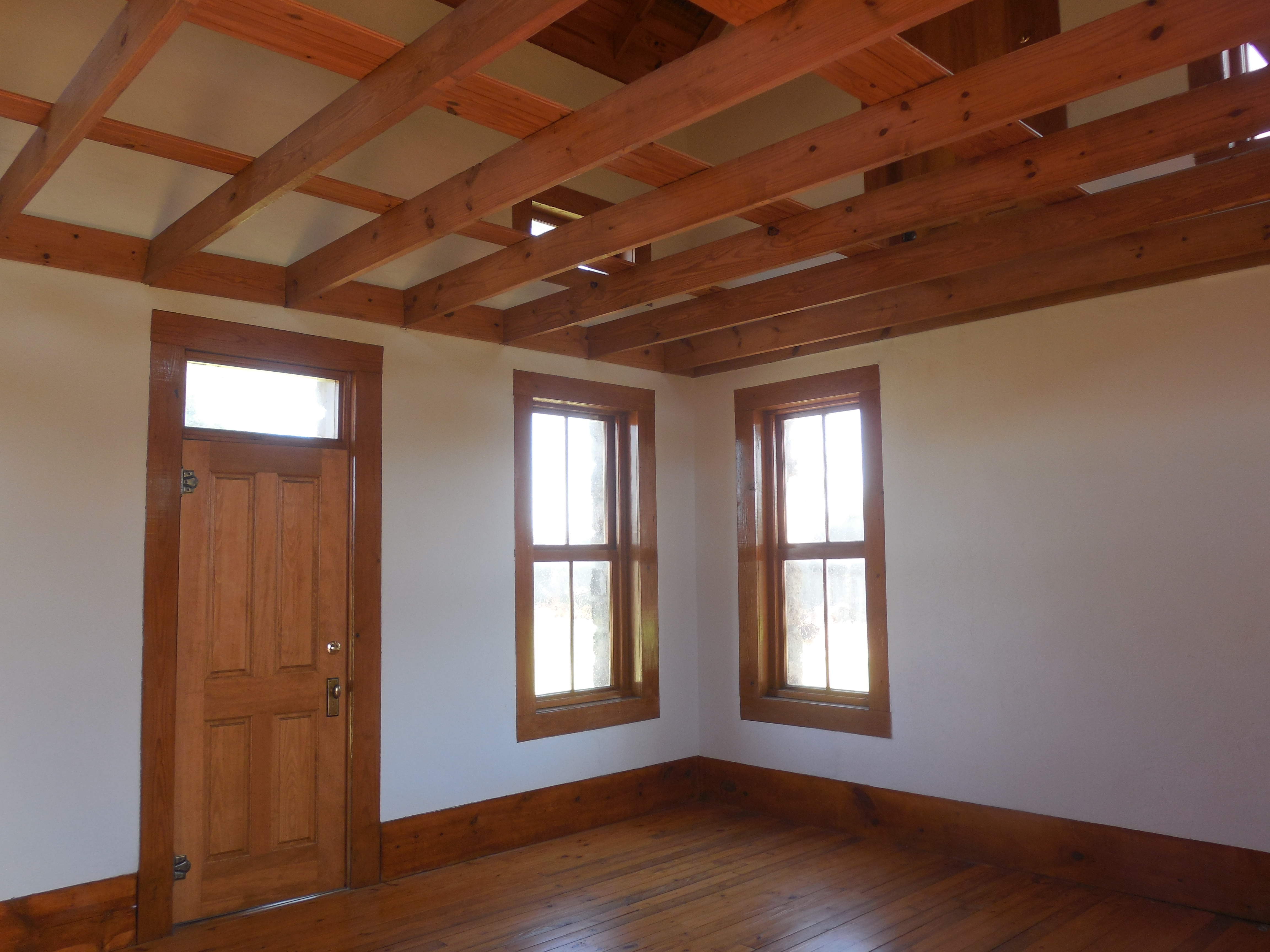
Inside the Cross S Ranch Headquarters.  The first floor has been restored, the second floor should be done in a few years.  Museum of the Western Prairie, Altus, OK, 2015.

Cross S Ranch Headquarters marker

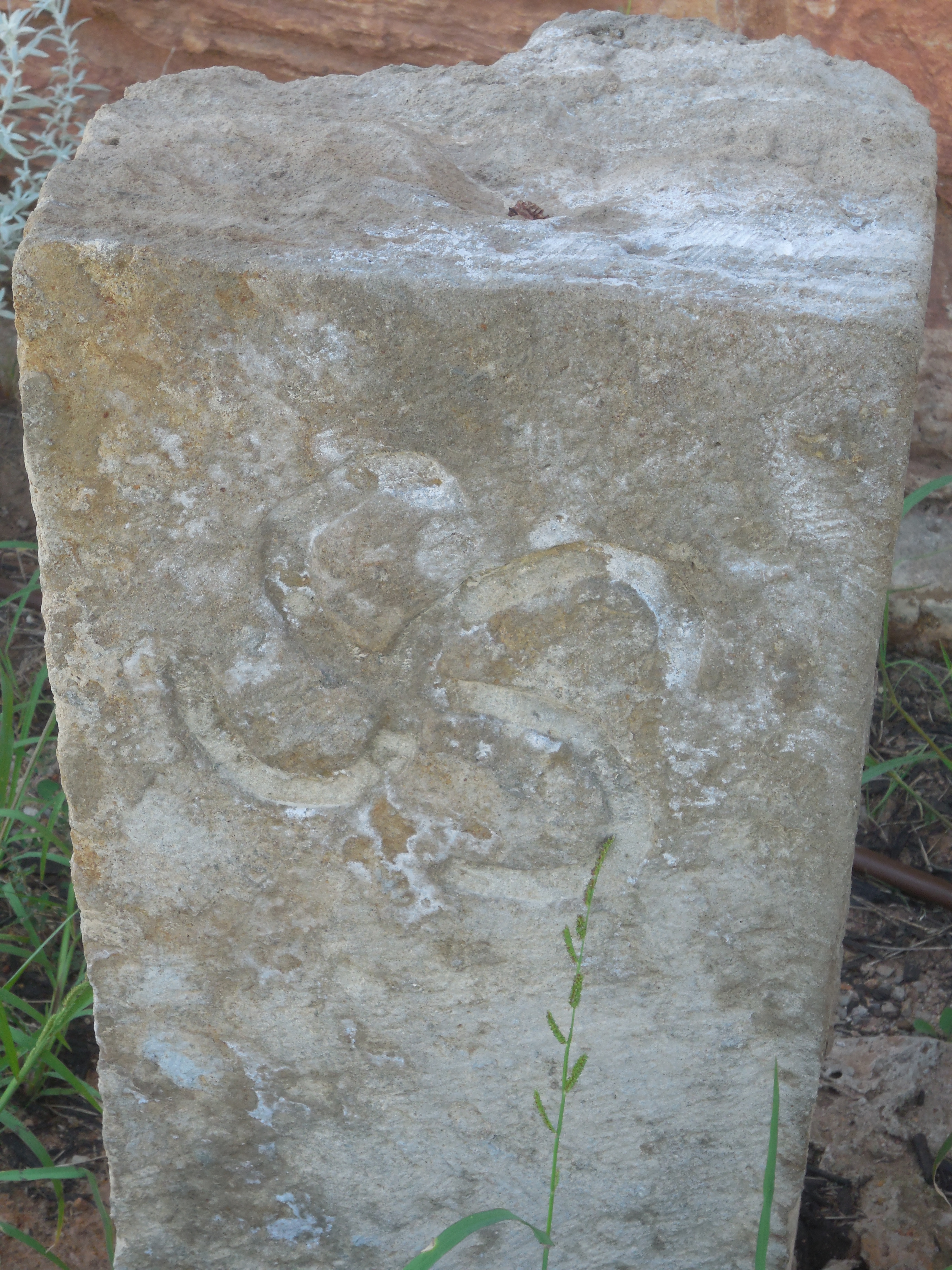
Stone marker with the Cross S brand stamped on it.  Museum of the Western Prairie, Altus, OK, 2015.

AAA Glidden Auto Tour in Oklahoma

Bre's Cars Sept 2015 065

1929 Duesenberg at the Masonic Temple in Guthrie, OK, 2015.

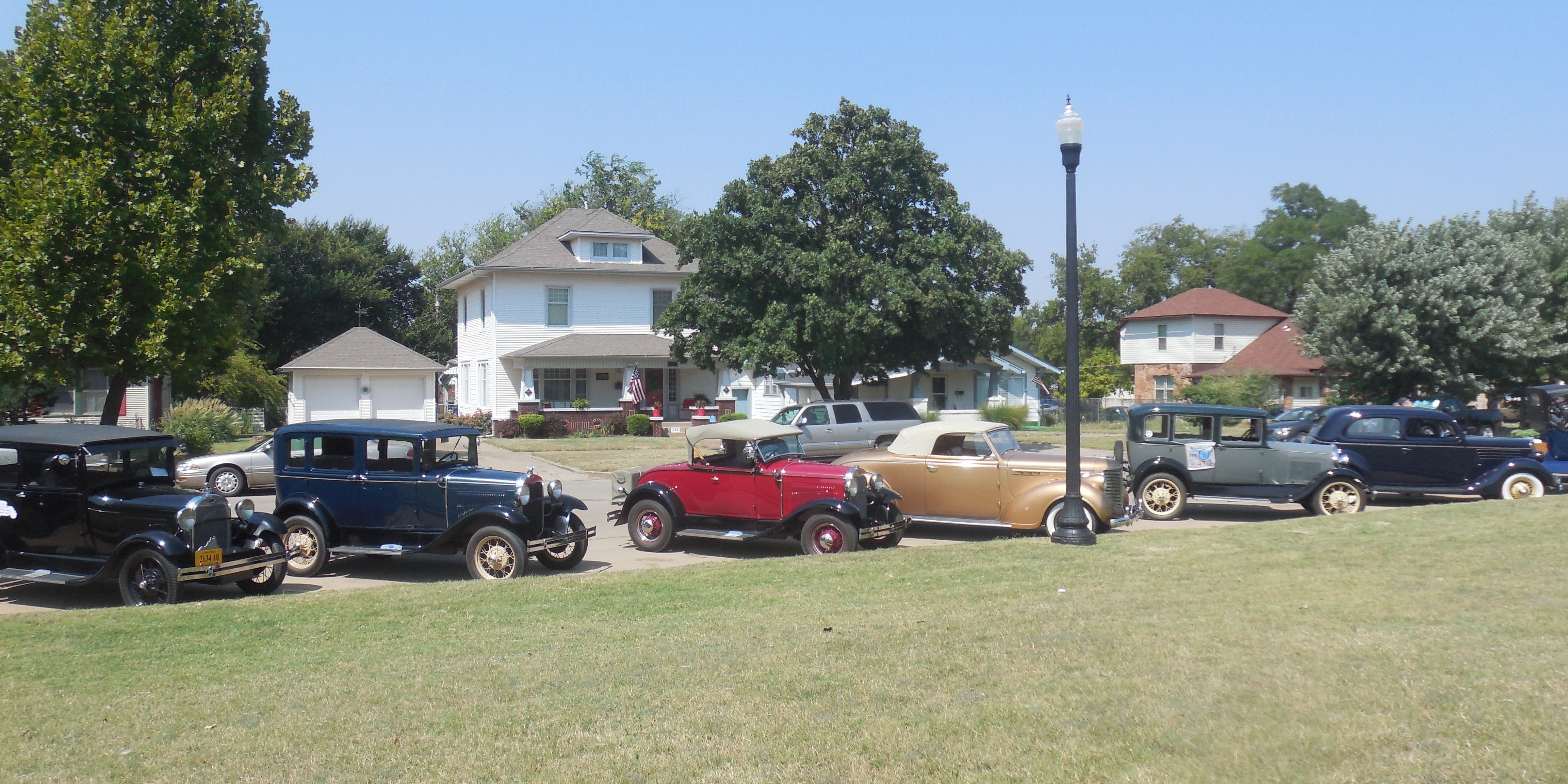
Just when I think it’s going to be a boring week, I get word over the weekend that the American Automobile Association’s Glidden Automobile Tour is in town.  It is being hosted by the Okie Region of the Antique Automobile Club of America all around the metro area August 30- September 4, 2015.  Today I went to the stop in Guthrie, OK at the Masonic Temple and being a car nut, it was totally worth the trip.

The cars featured are all pre-1943 and still in running order, they do have to drive to their destinations.  I passed a few around town while running some errands, so I knew I was going to be in for a treat.  The cars started arriving in Guthrie around 11a.m., most were still getting there when I showed up.  Do you know how cool it is to have an old Ford following you through the streets of downtown Guthrie?  I just stood on the corner and appreciated the rolling works of art as they arrived.  There is just a sound with these old cars that you can’t recreate with a newer vehicle.  And since some of these cars had hand controls for the gas, it was fun to see how smoothly the owners operated controls.

There were of course the usual Fords- Model A and Ts, some sweet Chevrolets, a few Buicks, and a couple Cadillacs.  But I like the different stuff, the cars you don’t always see.  My favorite was the show stopper 1929 Duesenberg (shown above).  There is nothing in the world I like better than Duesenbergs and have appreciated many in museums, so to have this one drive up to the show was just the coolest thing I’ve ever seen.  There was a beautiful butter yellow 1937 Cord convertible, a red 1913 White speedster, a 1914 Dodge Brothers touring car, a 1931 Oakland, and a 1914 Chandler.  I got to talk to the owner of a 1938 Chrysler Royal Convertible Coupe, it had been a barn in Texas until 1963 when it was restored to original.

Bre's Cars Sept 2015 045

The gold 1938 Chrysler Royal, Guthrie, OK, 2015.

The best part about the rolling car show is that it’s in town for 3 more days.  On September 2, 2015, the cars will be displayed downtown Oklahoma City on Broadway in what’s known as Automobile Alley (Broadway between NW 4th and NW 13th, more on the name some other day) between 10a.m.- 2p.m.  Then on September 3, 2015, they are traveling to Chickasha, OK to be displayed at the Grady County Fairgrounds from 11:30a.m.- 1p.m.  Last day to see them will be on Friday, September 4, 2015, when the cars go to the University of Oklahoma and are on display at the Lloyd Noble Center from 10a.m.- 2p.m.

Like I said it is totally worth a visit even if you’re not a car person.  You will see automotive brands that don’t exist any longer.  And for a little history, this is the first time the tour has been in Oklahoma City since June 24, 1910.  Yeah, you read that right 105 years ago.  The American Automobile Association started these endurance races in 1904 by Charles Glidden to promote the use of the automobile.  The races continued until 1913 when they stopped because they were too popular.  In 1946 the tours were restarted and continue to this day.

Bre's Cars Sept 2015 080

A Plymouth with a Packard, Guthrie, OK, 2015

Bre's Cars Sept 2015 114

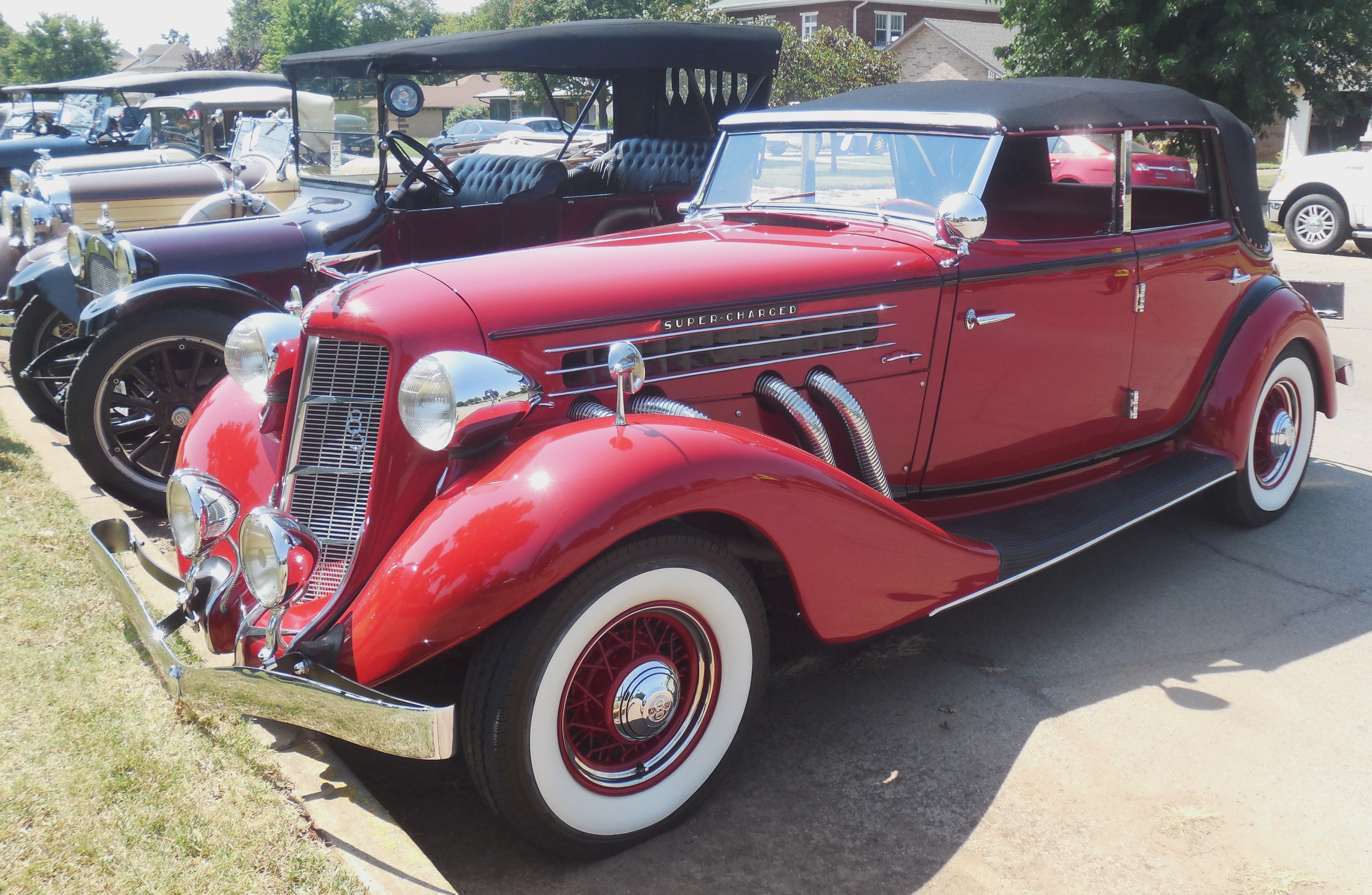
An Auburn with a Dodge Brothers, Guthrie, OK, 2015.