
Dr Slaughter House
A few weekends ago, I got the pleasure of touring the 1937 mansion of Dr WH Slaughter in northeast Oklahoma City. Situated on a 7 acre piece of land on NE 50th Street, just to the east of I-35, this home is a hidden gem and home to a vital member of Oklahoma City history.
Wyatt Hardy Slaughter was born in Alabama in 1872 and attended Walden University, then later Meharry Medical College, both in Nashville, TN, graduating around 1892. He arrived in Oklahoma City in 1903and became the first African American doctor in the new city. He worked with Dr WL Haywood to build the Utopia Hospital on NE 1st and later they established the Great Western Hospital in NE Oklahoma City. He practiced medicine in his own personal office in the Deep Deuce area of Oklahoma City, placing his Slaughter Buidling at 327 NE 2nd. This 3-story building was used for retail, housing his wife’s family’s pharmacy as well as the home of the Dunbar Library. Side note, none of these buildings are extant any longer, most succumbing to the wrecking ball in the 1960’s and 1970’s. He was also active in real estate, banking, as well as oil and gas. A public servant for many years, he was on many boards and committees. After retirement in 1949, he dedicated himself to building a YMCA on the NE side as well as a new school (current Frederick Douglass High School). He passed away in 1952, buried in Trice Hill Cemetery along side family. In 1907, he married Edna Randolph, the daughter of Jefferson Davis Randolph, the first African American Teacher in in Oklahoma City who founded the first black school at California and Harvey (what is now right in the middle of the Myriad Gardens).
Dr Slaughter purchased a 40 acre plot on NE 50th Street near Bryant Avenue in 1916 and built this home in 1937. The drive to the house is a old meandering paved trail that gives you a beautiful view of the mansion before leading you to a parking area next to the home. Being perched on a hill, the home dominates the landscape. The large stones that have been used in the construction also draw your eye to the home. Massive arches frame the east side of the house, these also provide a beautiful view of the countryside from the porch as well.
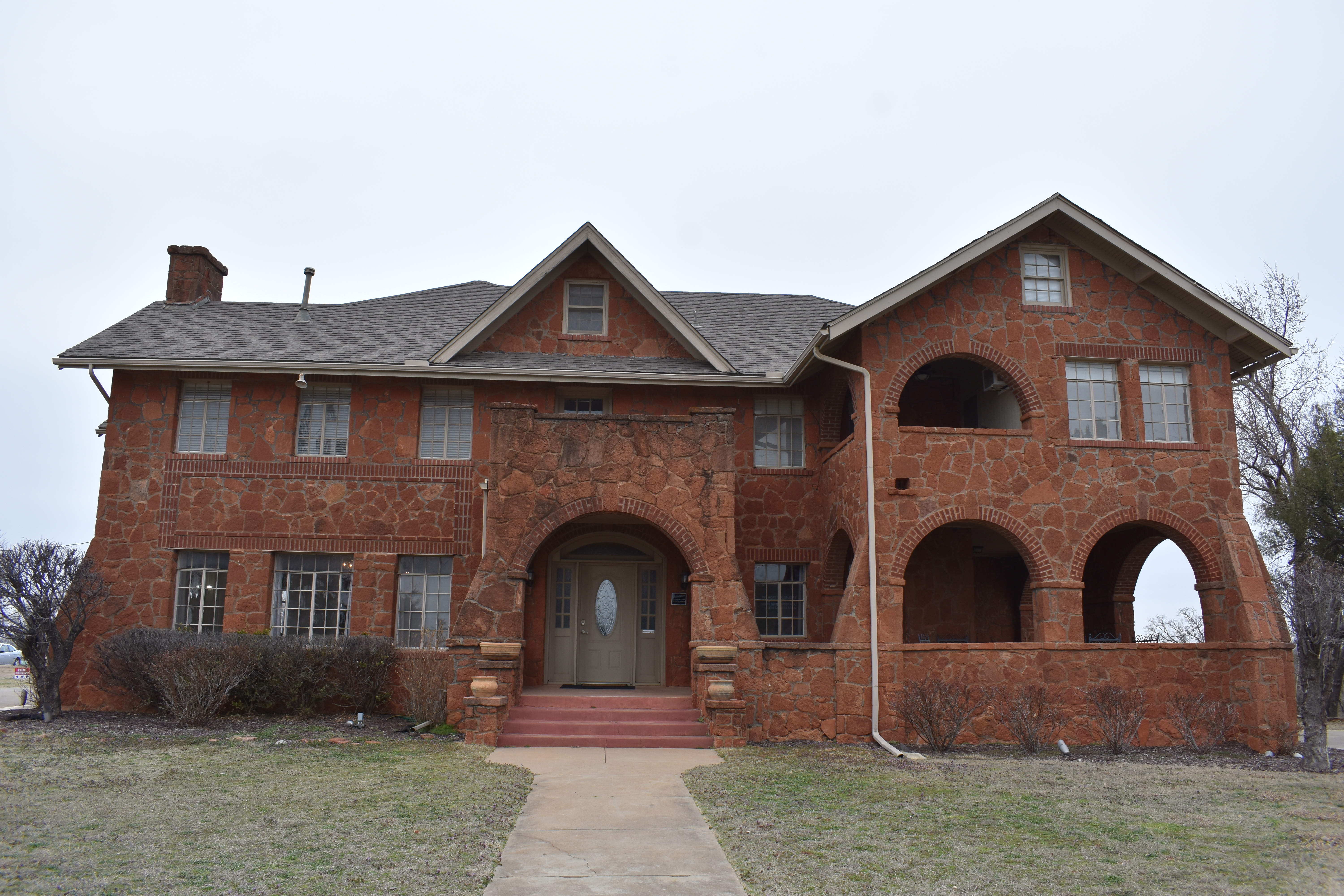

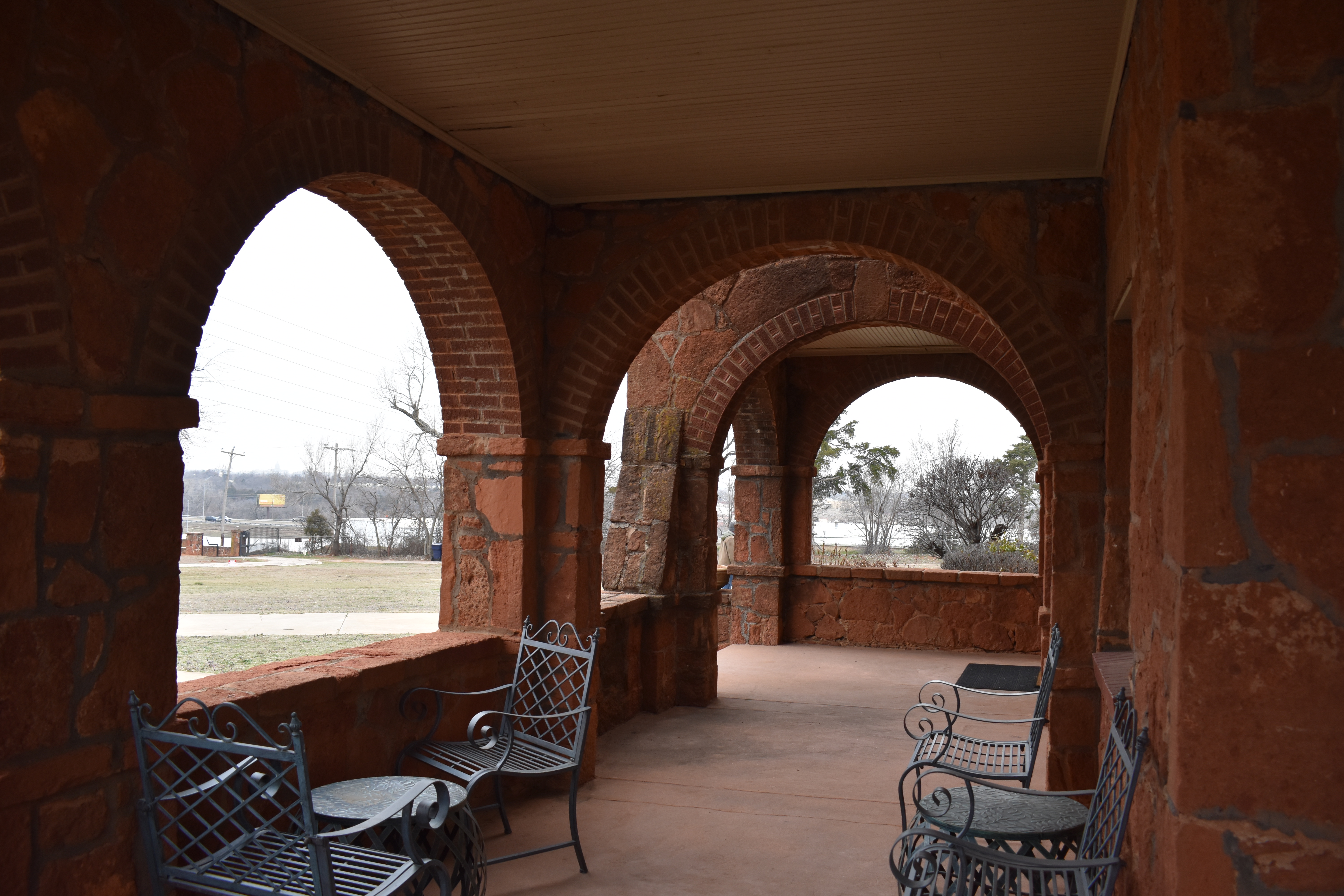
I wasn’t able to take pictures inside, but the home has been restored. After entering the home, you are in a foyer that to the left leads to the living area and to the right, a den or office, plus a hall to a bedroom suite. The dining is off the living area and also leads to a small kitchen. Upstairs are bedrooms, bathrooms, and storage areas. The two bedrooms that were open both had spacious bathrooms attached to them. One bathroom also led to an open air porch that is right above the front doors. There is a third floor but there was no access for guests. On the grounds are the remains of a well house and windmill. A functioning garage and small storage building are also original to the home and have been updated.
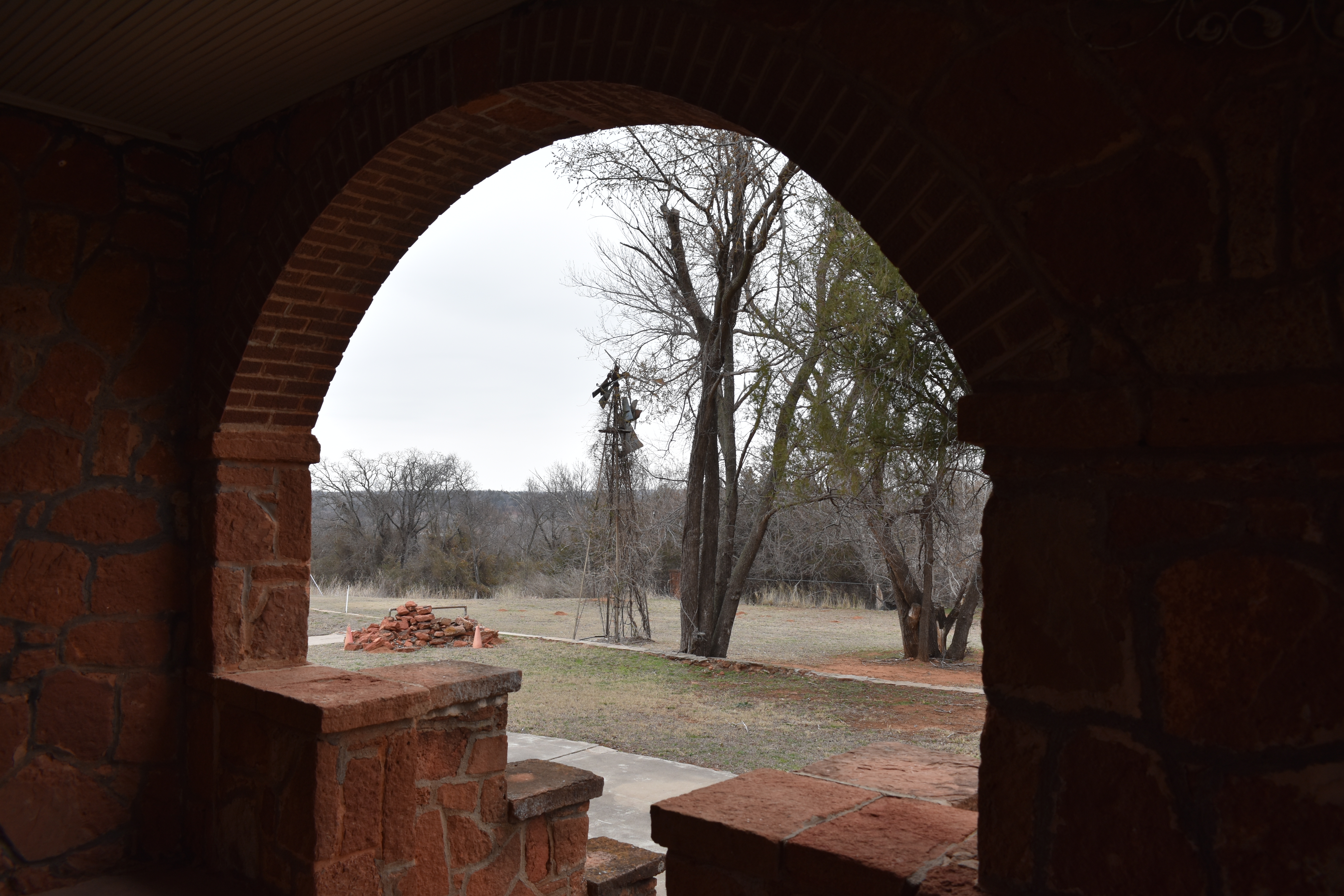

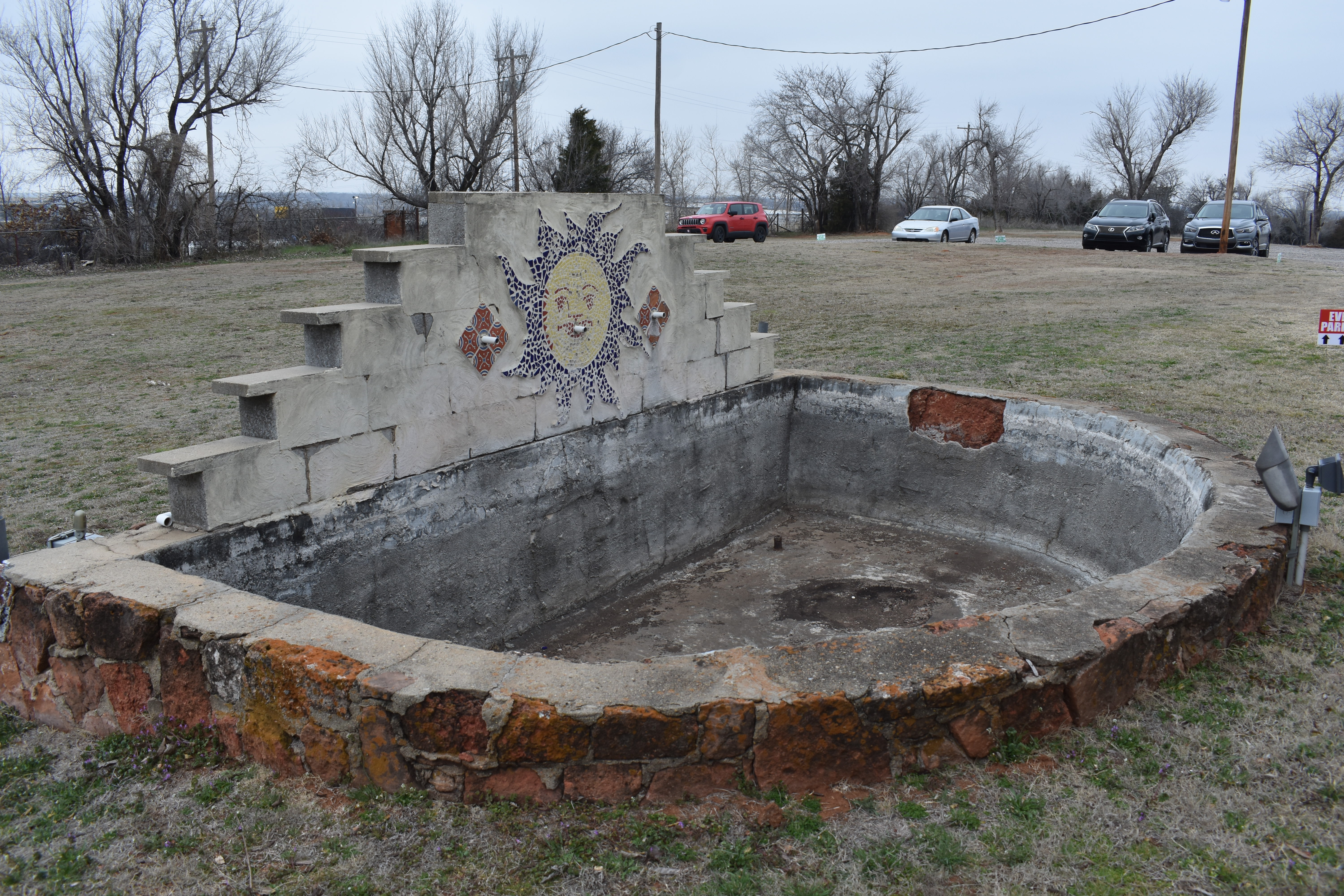
Over the years, parcels from the original 40 acres have been sold off. The house was empty for a time and vandals did hit the property. The home is in private ownership now and used for various events also rented out as an Airbnb. The property has also been listed on the National Register of Historic Places as of 2018. If you see a chance to visit this beautiful home, I highly recommend it.
 The Fat Okie